Views: 22 Author: SEPPE Publish Time: 2026-03-25 Origin: SEPPE
Calcined Bauxite for Colored Anti-Skid Pavements
Colored anti-skid pavements are widely used on urban greenways, bus lanes, steep slopes, tunnel entrances, bicycle paths, and public squares. These applications demand both visual appeal and reliable skid resistance, and the aggregate is the key factor determining pavement life and anti-skid performance.
Calcined bauxite is produced by firing high-grade raw bauxite at 850–1600°C, which raises the alumina content from 57–58% to 80–85%. This process yields several important properties.
First, it offers an extremely Low Aggregate Abrasion Value (AAV) of 4 becasue of its high hardness of 9 Mohs. For comparison, common basalt typically ranges from 8–12, and limestone is higher. A lower AAV means the aggregate wears more slowly, so the pavement maintains its skid resistance for a longer period.
Second, it provides a high Polished Stone Value (PSV) above 70, meaning it resists polishing under traffic and retains surface texture over time. With a Mohs hardness of 9, the particles remain intact during construction and use.
The light base buff color is another practical advantage. Colored pavements require pigments, and a lighter base takes color easier than a dark base, resulting in brighter, more stable colors—often with less pigment needed.
In terms of performance, calcined bauxite mixtures exhibit excellent high-temperature stability, outperforming basalt and limestone in hot climates and heavy-traffic conditions. However, their(Calcined Bauxite) low-temperature performance, crack resistance, and moisture stability are somewhat weaker. This can be addressed by blending in some limestone aggregate or moderately increasing the asphalt content. We recommend sample testing before full-scale application to find the optimal formulation.
Particle size selection depends on the application. 1–3mm is suitable for bicycle paths, pedestrian walkways, and public squares—light-traffic areas where a comfortable surface is desired. 3–5mm is better for highways, bus lanes, steep slopes, and tunnel sections—heavy-traffic areas requiring higher skid resistance. Custom sizes are also available.
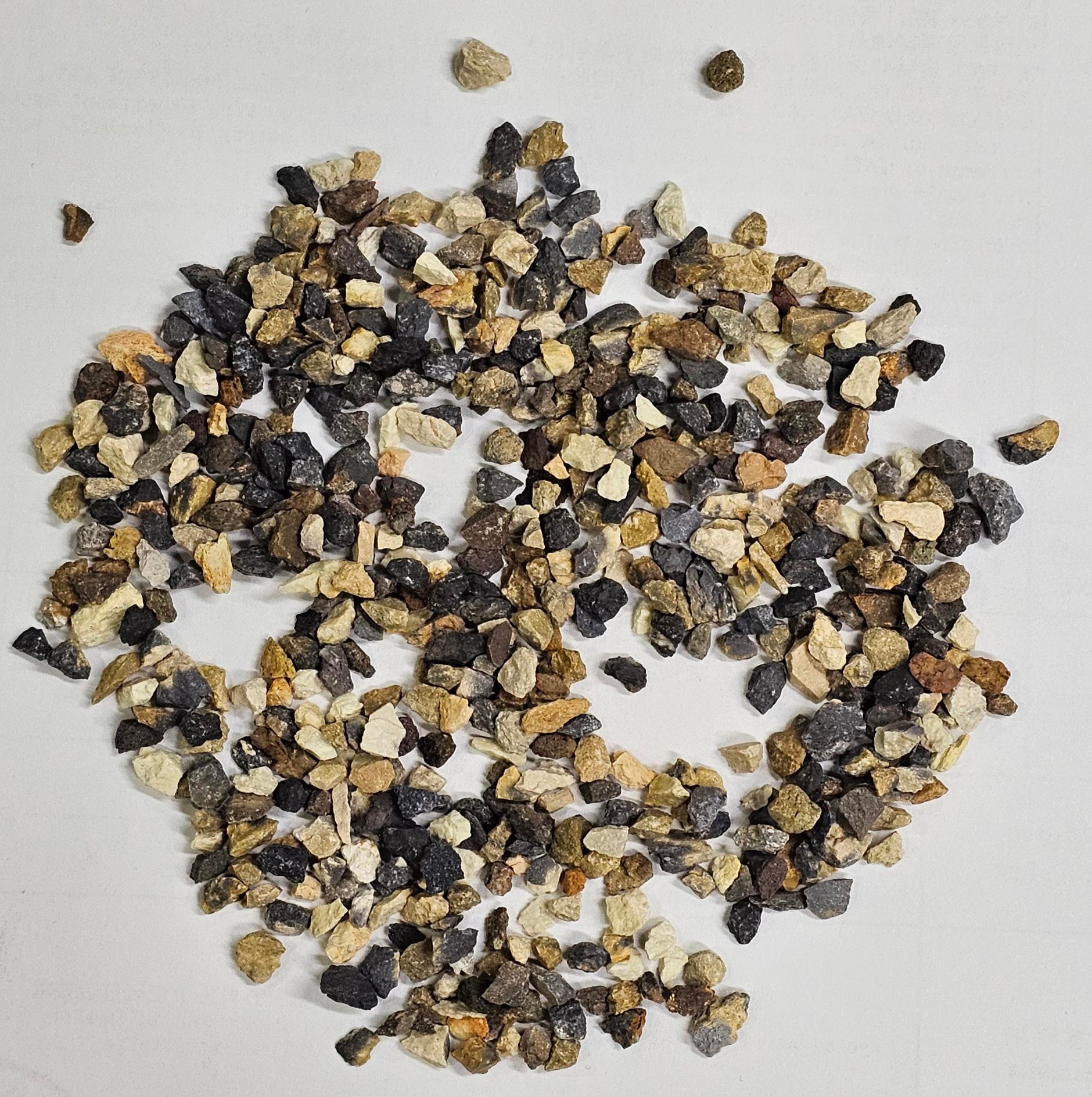

The application rate should be determined through small-scale testing. The goal is uniform single-layer coverage with good bonding between aggregate and binder. Over-application wastes material, and excess aggregate that is not properly bonded can loosen later, affecting appearance and performance.
Customers typically handle coloring themselves. Our calcined bauxite has a light base color (buff), which accepts pigment easily. We recommend confirming color results with sample tests before proceeding.
In short, calcined bauxite offers low abrasion, high skid resistance, excellent high-temperature performance, and a base color that simplifies coloring. No single aggregate suits every situation—the key is choosing the right one for the specific project.
For sample testing or technical inquiries, please contact SEPPE at info@seppe.cn.