
Views: 128 Author: CENOLITE Publish Time: 2026-09-23 Origin: SEPPE TECH
We primarily categorize SEPPE CenoLite products into oil-well cementing grades and coating grades.
Both types consist of graded, low-moisture, hollow aluminosilicate microspheres.
While we must control parameters such as flotation rate, density, particle morphology, particle size, and chemical composition for both, the testing focus varies depending on the application.
Oil-well cementing applications prioritize flotation rate, density, and particle size distribution (sieve analysis), whereas coating applications place greater emphasis on laser particle size, pH value, iron content, and dispersion performance within specific coating systems.
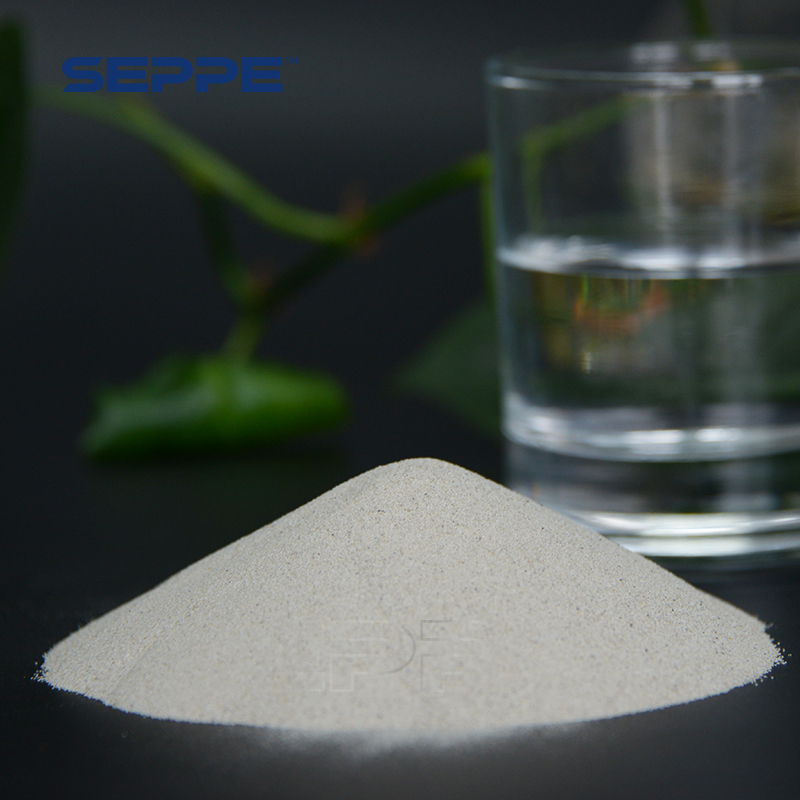
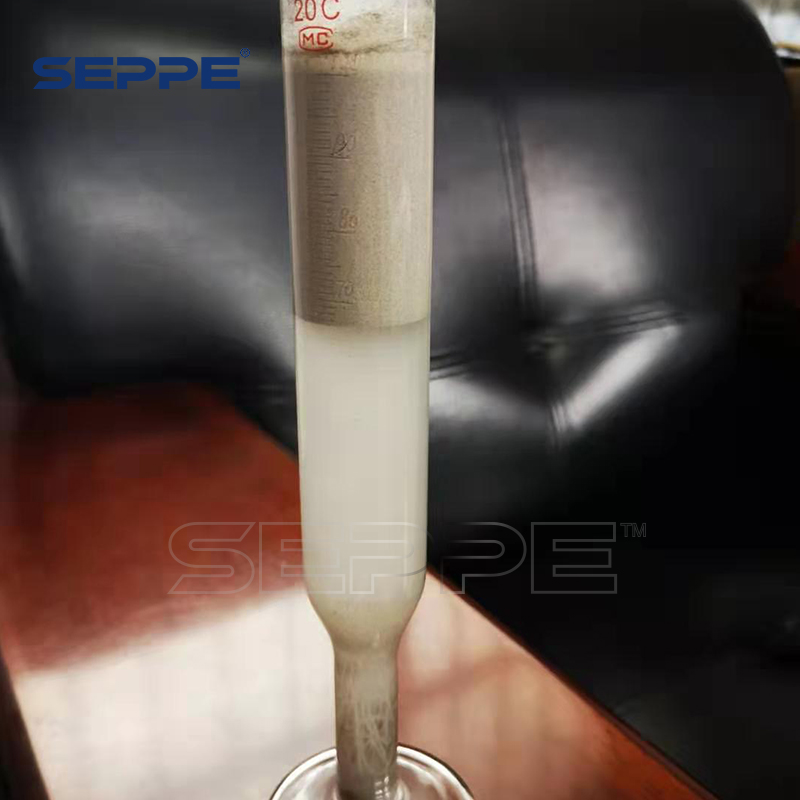
This test relies on density-based separation: intact cenospheres have a density lower than water and float on the surface, while solid or broken particles are denser than water and sink to the bottom.
First, we take a specific quantity of the cenosphere sample and thoroughly disperse it in water.
We then allow the mixture to stand so that the floating and sinking particles separate into distinct layers.
Finally, we collect the floating cenospheres; we calculate the flotation rate as the percentage of the dried mass of the floating particles relative to the total mass of the initial sample.
CenoLite 8540 (oil-well cementing grade) has a flotation rate of ≥95%, which is a critical performance indicator for cenospheres used in low-density oil-well cement slurries.
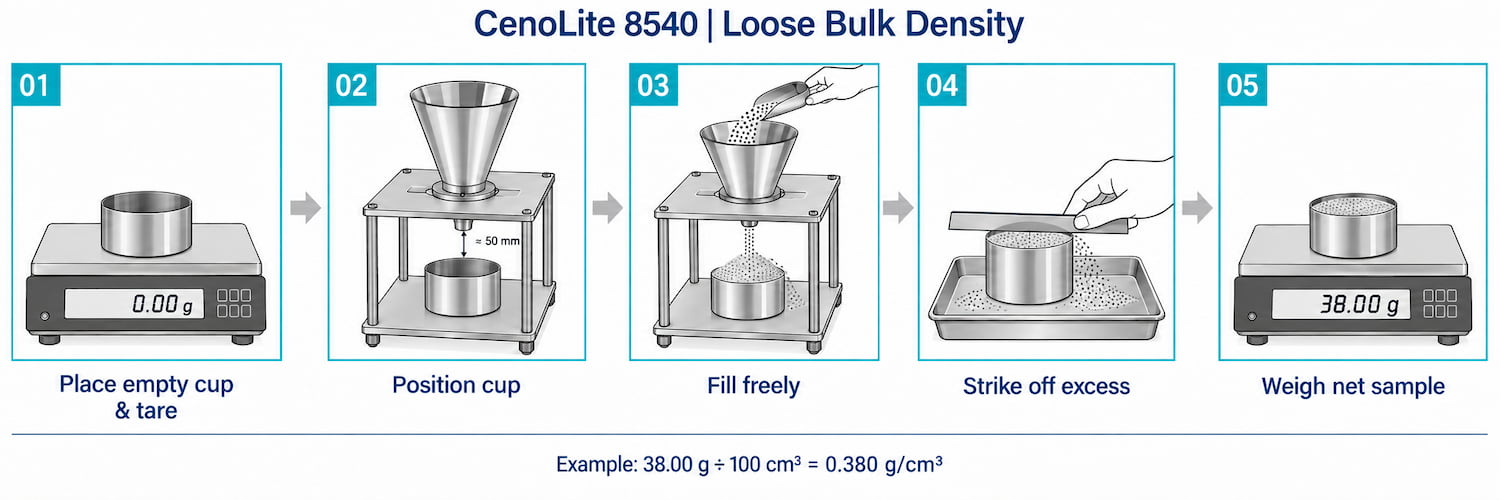
The key principle here is to avoid applying any external force—such as compaction or tapping—to the cenospheres, thereby including the void spaces between particles.
This method determines the mass of cenospheres per unit of total volume in a naturally settled state.
We use a standard container with a fixed, precisely known volume; we allow the cenospheres to flow naturally into and fill the container. After leveling the surface, we weigh the container and calculate the loose bulk density by dividing the mass of the cenospheres by the container's volume.
The loose bulk density specification for CenoLite 8540 is 0.30–0.45 g/cm³. Refer to the constant volume method at ISO 23145-2:2012.
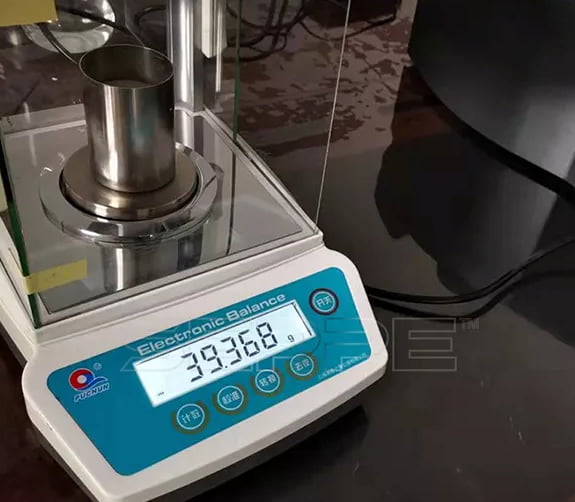
Often confused with bulk density, true density differs in that it excludes the void spaces between particles.
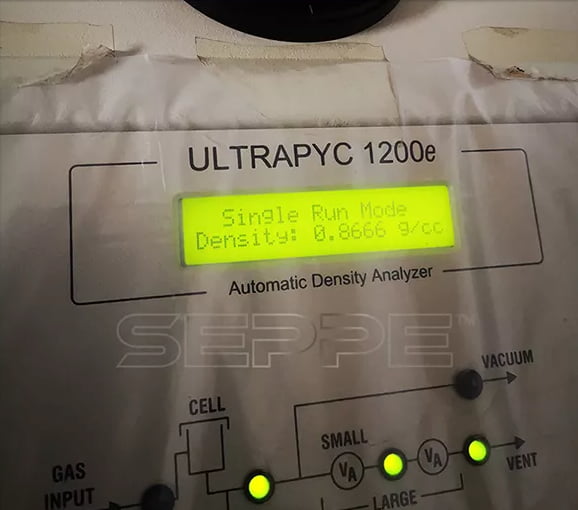
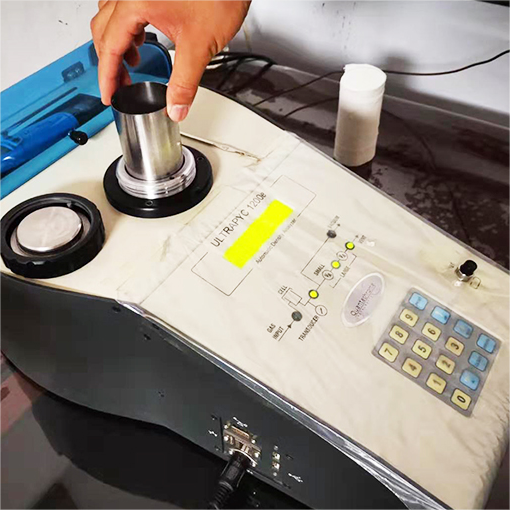
SEPPE measures this using a gas displacement pycnometer. When testing with a small-molecule gas like helium, the gas fills all the interstitial spaces between the particles but cannot penetrate the sealed hollow cavities within the cenospheres.
By measuring the change in gas pressure before and after we place the sample in the test chamber, the instrument precisely calculates the volume of the cenosphere particles themselves—a volume that includes the internal hollow cavity but excludes the gaps between particles. Dividing the sample mass by this volume yields the particle density.
Since the displacement gas does not enter the sealed hollow cavities, this result differs from the strict "true density" we obtain by grinding the shell material into a powder.
SEPPE CenoLite: 0.75–0.90 g/cm³; based on the gas displacement method (reference: ISO 12154:2014).
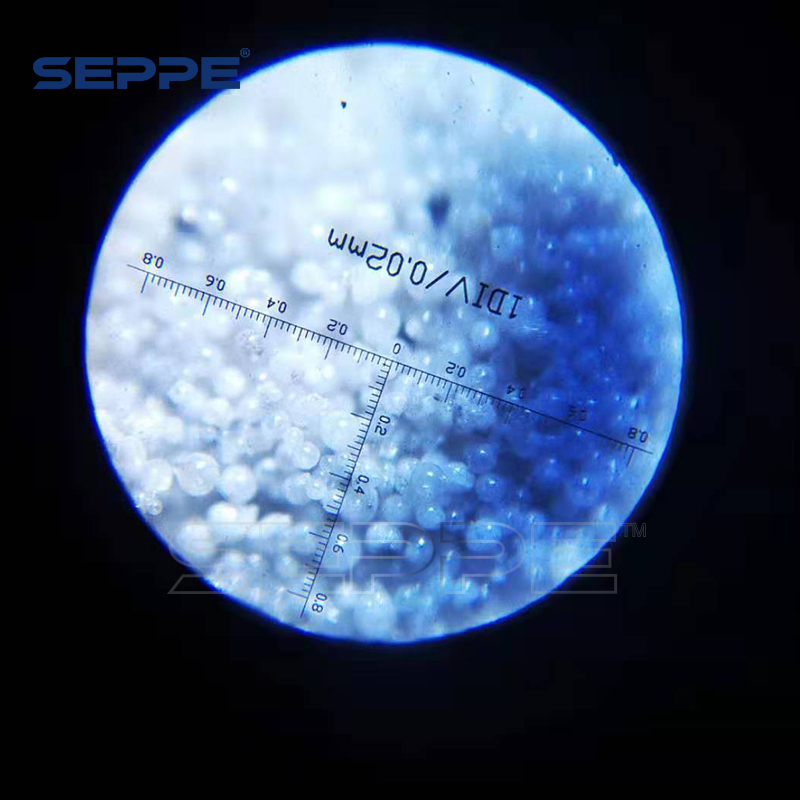
We use microscopy to examine the appearance of the hollow cenosphere microspheres.
Microscopic imaging allows for the assessment of sphericity, surface condition, the proportion of intact particles, and the presence of broken particles or impurities.
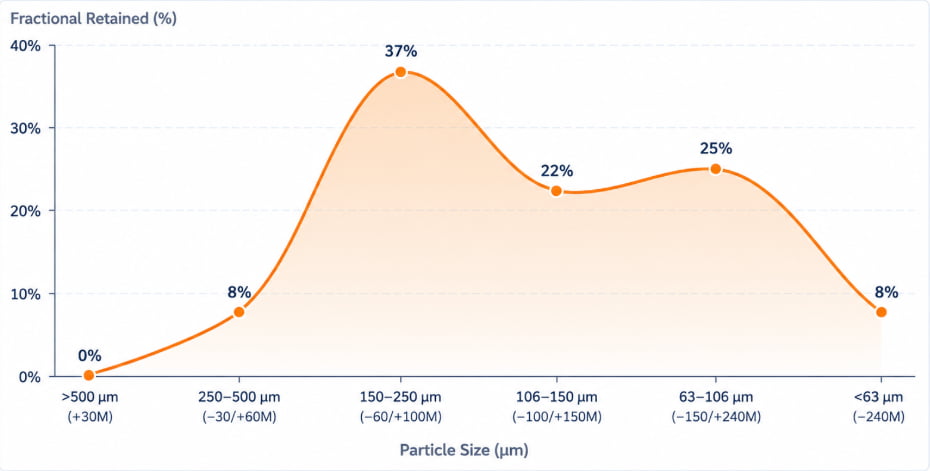
SEPPE employs two common particle size testing methods depending on the application.
For oil-well cementing grade cenospheres, we use standard sieve analysis; this method facilitates the control of broad particle size distributions, is simple to operate, and provides intuitive results.
(See: CenoLite 8540 Particle Size Distribution)
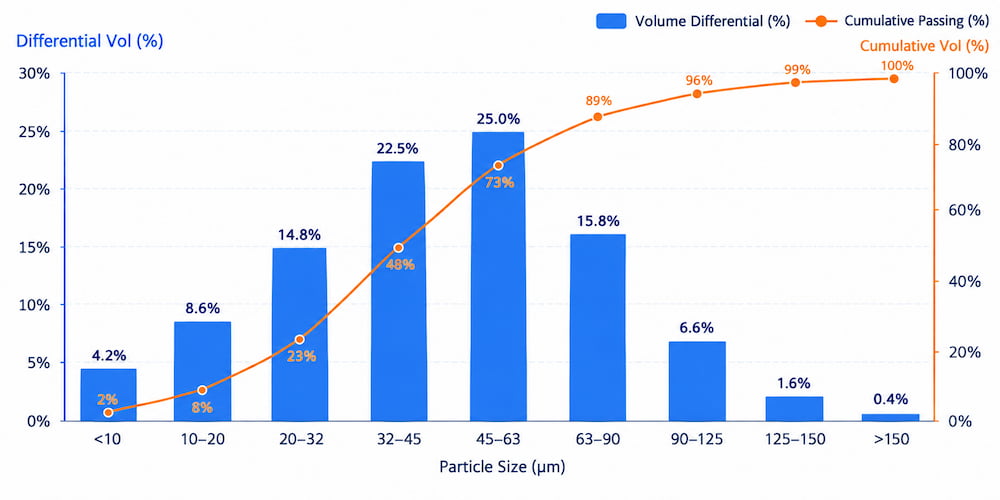
For coating-grade products, we use laser diffraction particle size analyzers in accordance with the standard at ISO 13320:2020; we typically report key values including D50 and D98.
(See: CenoLite 910 Coating Grade Particle Size Distribution – D50: 45–60 μm; D98: 105–140 μm)
If you are interested in our cenosphere products, please contact our team at contact our team.
We can assist in determining the appropriate specifications and provide relevant technical data or batch documentation.
Views: 128 Author: CENOLITE Publish Time: 2026-09-23 Origin: SEPPE TECH
We primarily categorize SEPPE CenoLite products into oil-well cementing grades and coating grades.
Both types consist of graded, low-moisture, hollow aluminosilicate microspheres.
While we must control parameters such as flotation rate, density, particle morphology, particle size, and chemical composition for both, the testing focus varies depending on the application.
Oil-well cementing applications prioritize flotation rate, density, and particle size distribution (sieve analysis), whereas coating applications place greater emphasis on laser particle size, pH value, iron content, and dispersion performance within specific coating systems.
This test relies on density-based separation: intact cenospheres have a density lower than water and float on the surface, while solid or broken particles are denser than water and sink to the bottom.
First, we take a specific quantity of the cenosphere sample and thoroughly disperse it in water.
We then allow the mixture to stand so that the floating and sinking particles separate into distinct layers.
Finally, we collect the floating cenospheres; we calculate the flotation rate as the percentage of the dried mass of the floating particles relative to the total mass of the initial sample.
CenoLite 8540 (oil-well cementing grade) has a flotation rate of ≥95%, which is a critical performance indicator for cenospheres used in low-density oil-well cement slurries.
The key principle here is to avoid applying any external force—such as compaction or tapping—to the cenospheres, thereby including the void spaces between particles.
This method determines the mass of cenospheres per unit of total volume in a naturally settled state.
We use a standard container with a fixed, precisely known volume; we allow the cenospheres to flow naturally into and fill the container. After leveling the surface, we weigh the container and calculate the loose bulk density by dividing the mass of the cenospheres by the container's volume.
The loose bulk density specification for CenoLite 8540 is 0.30–0.45 g/cm³. Refer to the constant volume method at ISO 23145-2:2012.
Often confused with bulk density, true density differs in that it excludes the void spaces between particles.
SEPPE measures this using a gas displacement pycnometer. When testing with a small-molecule gas like helium, the gas fills all the interstitial spaces between the particles but cannot penetrate the sealed hollow cavities within the cenospheres.
By measuring the change in gas pressure before and after we place the sample in the test chamber, the instrument precisely calculates the volume of the cenosphere particles themselves—a volume that includes the internal hollow cavity but excludes the gaps between particles. Dividing the sample mass by this volume yields the particle density.
Since the displacement gas does not enter the sealed hollow cavities, this result differs from the strict "true density" we obtain by grinding the shell material into a powder.
SEPPE CenoLite: 0.75–0.90 g/cm³; based on the gas displacement method (reference: ISO 12154:2014).
We use microscopy to examine the appearance of the hollow cenosphere microspheres.
Microscopic imaging allows for the assessment of sphericity, surface condition, the proportion of intact particles, and the presence of broken particles or impurities.
SEPPE employs two common particle size testing methods depending on the application.
For oil-well cementing grade cenospheres, we use standard sieve analysis; this method facilitates the control of broad particle size distributions, is simple to operate, and provides intuitive results.
(See: CenoLite 8540 Particle Size Distribution)
For coating-grade products, we use laser diffraction particle size analyzers in accordance with the standard at ISO 13320:2020; we typically report key values including D50 and D98.
(See: CenoLite 910 Coating Grade Particle Size Distribution – D50: 45–60 μm; D98: 105–140 μm)
If you are interested in our cenosphere products, please contact our team at contact our team.
We can assist in determining the appropriate specifications and provide relevant technical data or batch documentation.