Views: 13 Author: SEPPE Cenosphere Team Publish Time: 2026-07-23 Origin: SEPPE TECH
In our previous guide, How to Choose High-Quality Cenospheres, density was one of the first specifications buyers were advised to check.
Today, we will look more closely at the true density and bulk density of cenospheres. These two values describe different things. They also affect different parts of purchasing, formulation, packaging, and production.
| Comparison | True Density | Bulk Density |
|---|---|---|
| What it describes | Density of the particles themselves | Weight of loose powder in a given volume |
| Spaces between particles | Not included | Included |
| Main influence | Lightweight performance and formulation | Packaging, storage, dosing, and transport volume |
| Common test | Density or pycnometer test | Loose or tapped bulk density test |
| Buyer should ask | What method was used? | Is the value loose or tapped? |
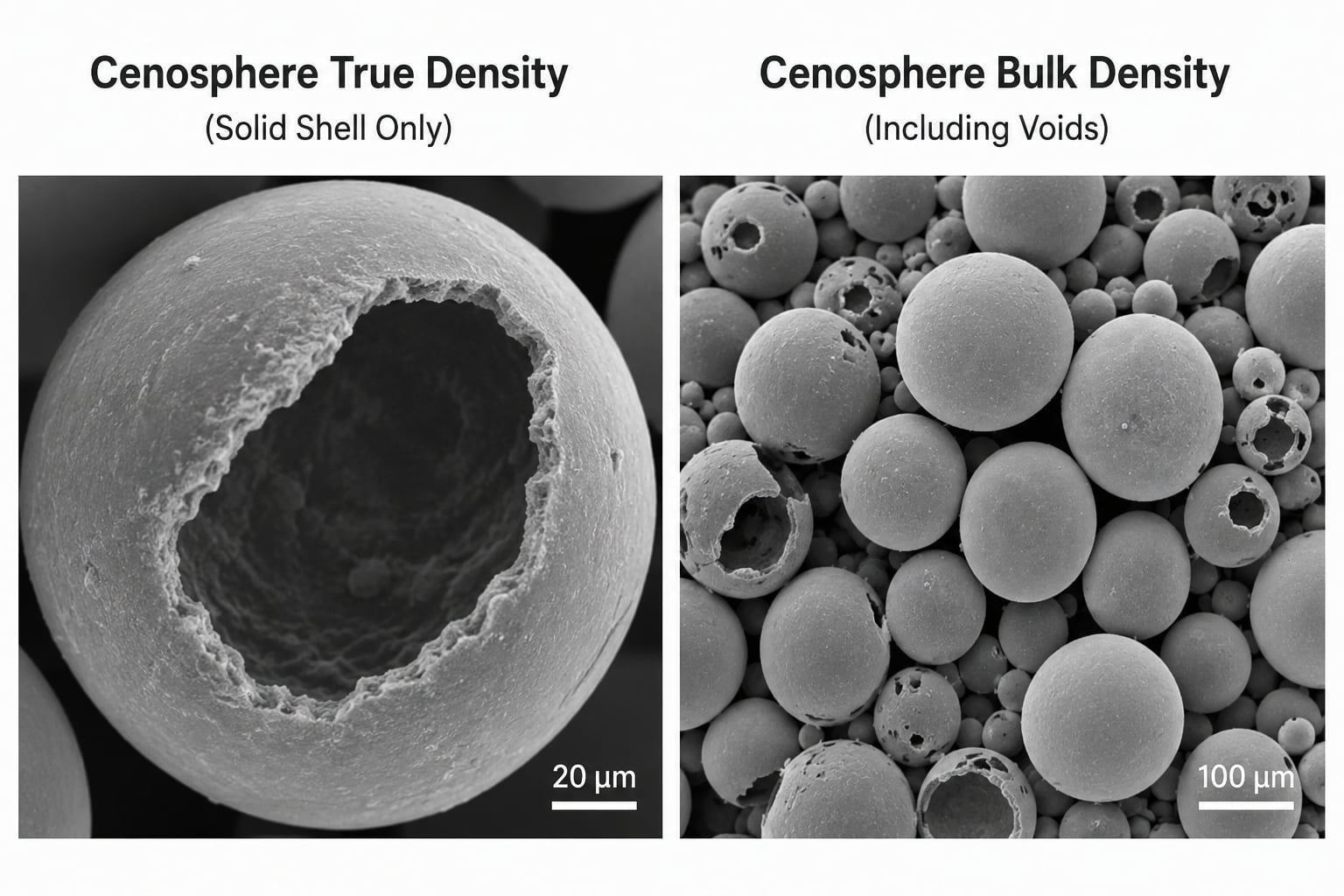
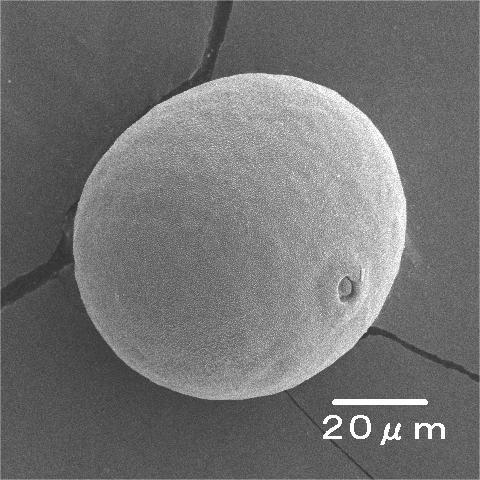
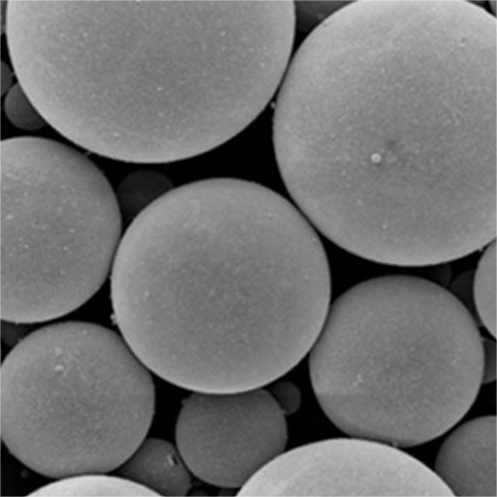
In many cenosphere data sheets, true density refers to the average density of the individual hollow particles. It does not include the air spaces between particles in a bag. Because an intact cenosphere contains a sealed hollow center, its average particle density can be below 1.0 g/cm³. This value is closely related to how much the material can reduce the weight of a coating, resin, composite, or cement formulation.
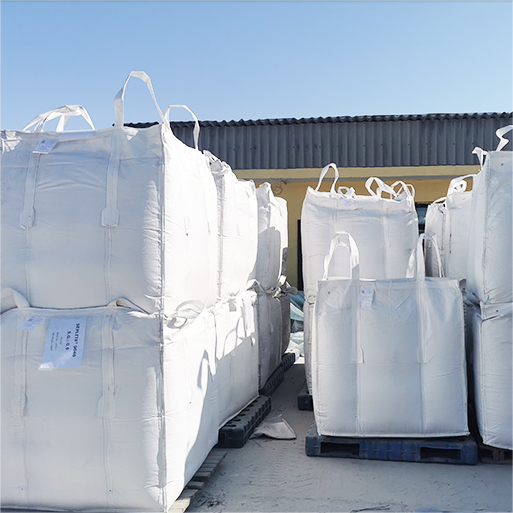
Bulk density looks at the material as a loose powder. It measures how much a container of cenospheres weighs and includes the air spaces between the particles. This is why bulk density is normally lower than true density. It is useful for estimating packaging volume, warehouse space, hopper capacity, transportation requirements, and volumetric dosing.
A large difference between true density and bulk density is normal.
For example, a SEPPE oilfield cementing grade has a typical true density of 0.80 g/cm³ and a bulk density of 0.36 g/cm³. This does not mean that one of the values is wrong.
The main reason is that bulk density includes the gaps between particles, while true density does not.
Two cenosphere grades can have a similar true density but different bulk densities. This may happen because their particle size distributions and packing behavior are different.
The opposite is also possible. Similar bulk density does not prove that two products have the same particle structure, strength, or lightweight performance.
Lower true density can improve weight reduction, but the lowest value is not automatically the best choice.
Very low-density cenospheres may have a larger internal void or thinner shells. This can increase the possibility of breakage during high-shear mixing, pumping, pressing, or other demanding processes.
Density alone cannot predict strength. Particle size, shell thickness, chemical composition, surface defects, and processing quality also matter.
For coatings and fillers, buyers may focus on true density, particle size, dispersion, and surface finish. For oilfield cementing cenospheres, density should be considered together with strength and breakage resistance during mixing and pumping.
SEPPE supplies painting-grade cenospheres and oilfield cementing cenospheres.
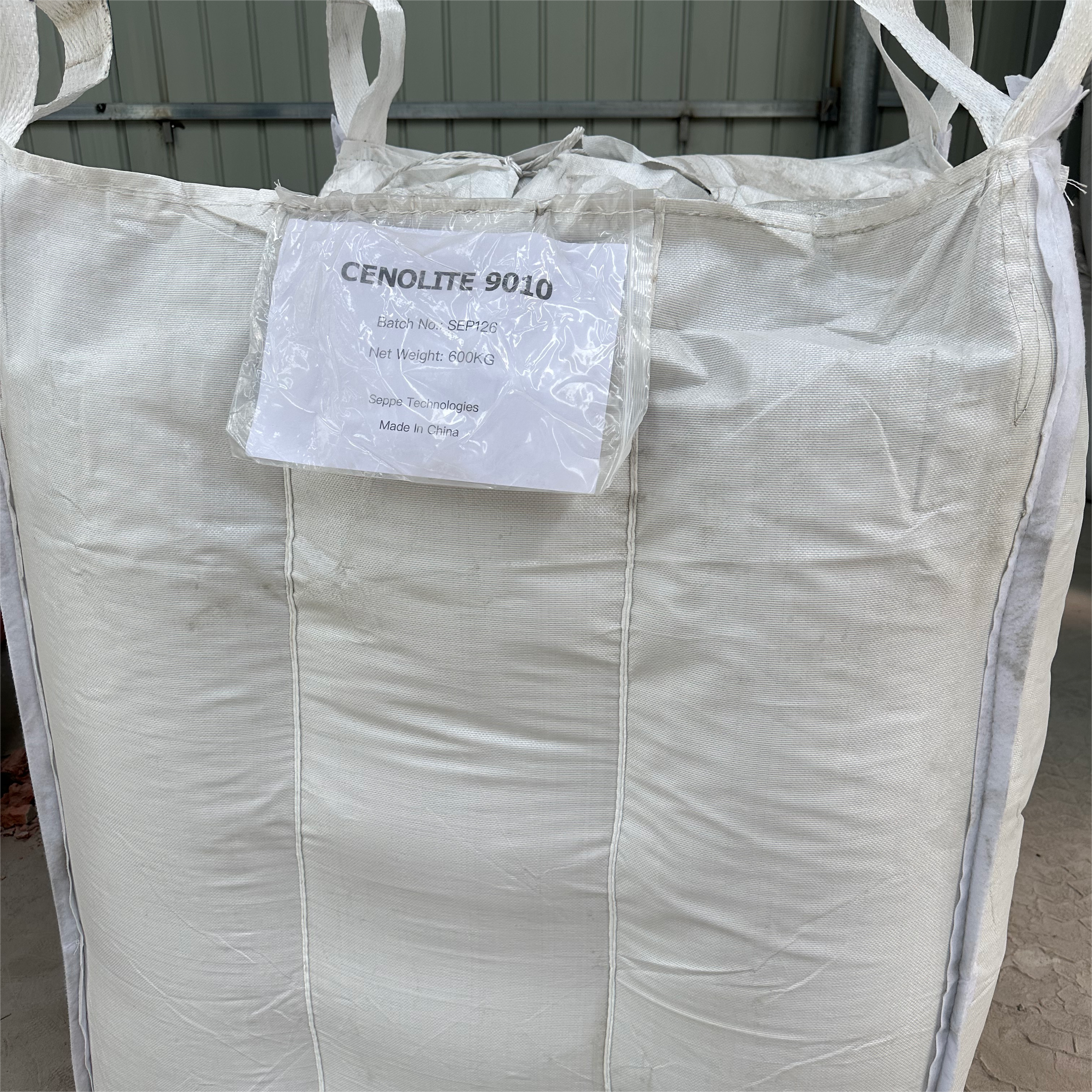
Grades can be selected according to true density, bulk density, particle size, float rate, moisture, strength, and final application. SEPPE can also provide TDS, MSDS, COA, packaging information, and samples when required.
For specifications or quotation support, contact info@seppe.cn with your application, required density, particle size, packaging preference, and monthly usage.
(More grade-specific documents and test data are available on request.)
Views: 13 Author: SEPPE Cenosphere Team Publish Time: 2026-07-23 Origin: SEPPE TECH
In our previous guide, How to Choose High-Quality Cenospheres, density was one of the first specifications buyers were advised to check.
Today, we will look more closely at the true density and bulk density of cenospheres. These two values describe different things. They also affect different parts of purchasing, formulation, packaging, and production.
| Comparison | True Density | Bulk Density |
|---|---|---|
| What it describes | Density of the particles themselves | Weight of loose powder in a given volume |
| Spaces between particles | Not included | Included |
| Main influence | Lightweight performance and formulation | Packaging, storage, dosing, and transport volume |
| Common test | Density or pycnometer test | Loose or tapped bulk density test |
| Buyer should ask | What method was used? | Is the value loose or tapped? |
In many cenosphere data sheets, true density refers to the average density of the individual hollow particles. It does not include the air spaces between particles in a bag. Because an intact cenosphere contains a sealed hollow center, its average particle density can be below 1.0 g/cm³. This value is closely related to how much the material can reduce the weight of a coating, resin, composite, or cement formulation.
Bulk density looks at the material as a loose powder. It measures how much a container of cenospheres weighs and includes the air spaces between the particles. This is why bulk density is normally lower than true density. It is useful for estimating packaging volume, warehouse space, hopper capacity, transportation requirements, and volumetric dosing.
A large difference between true density and bulk density is normal.
For example, a SEPPE oilfield cementing grade has a typical true density of 0.80 g/cm³ and a bulk density of 0.36 g/cm³. This does not mean that one of the values is wrong.
The main reason is that bulk density includes the gaps between particles, while true density does not.
Two cenosphere grades can have a similar true density but different bulk densities. This may happen because their particle size distributions and packing behavior are different.
The opposite is also possible. Similar bulk density does not prove that two products have the same particle structure, strength, or lightweight performance.
Lower true density can improve weight reduction, but the lowest value is not automatically the best choice.
Very low-density cenospheres may have a larger internal void or thinner shells. This can increase the possibility of breakage during high-shear mixing, pumping, pressing, or other demanding processes.
Density alone cannot predict strength. Particle size, shell thickness, chemical composition, surface defects, and processing quality also matter.
For coatings and fillers, buyers may focus on true density, particle size, dispersion, and surface finish. For oilfield cementing cenospheres, density should be considered together with strength and breakage resistance during mixing and pumping.
SEPPE supplies painting-grade cenospheres and oilfield cementing cenospheres.
Grades can be selected according to true density, bulk density, particle size, float rate, moisture, strength, and final application. SEPPE can also provide TDS, MSDS, COA, packaging information, and samples when required.
For specifications or quotation support, contact info@seppe.cn with your application, required density, particle size, packaging preference, and monthly usage.
(More grade-specific documents and test data are available on request.)