You are here: Home » Products » CENOSPHERE » Painting Cenosphere » Cenospheres for Polyester Resin

Product Details

Cenospheres for Polyester Resin

Cenosphere is a hollow ball of fly ash that floats on water , and it's mainly composed of silica and alumina. It's widely used in refractory and thermal insulation materials, building materials, petroleum industry, insulating materials, coatings industry, ect.
Availability:
Quantity:
  • 100Mesh

  • SEPPE

  • 2621900090

Cenospheres for Polyester Resin

SEPPE cenospheres for polyester resin are lightweight hollow aluminosilicate microspheres with 100 Mesh Through particle size and approx. 0.80-0.85 g/cm³ true density. This grade is designed for polyester resin systems, artificial stone, casting fillers, and weight-reduction applications where stable mineral filling and low density are required.


★ 100 Mesh Through
◆ True Density 0.80-0.85 g/cm³
★ Polyester Resin Filler
◆ Artificial Stone Filler
★ Low Density Resin Filler
◆ Weight Reduction Grade
ISO 9001:2015 Certified · Batch QC · TDS Available · Custom Packaging

What Are Cenospheres for Polyester Resin?

▸ Cenospheres for polyester resin are lightweight resin filler microspheres used to reduce compound density while maintaining mineral stability and filling volume.

▸ The 100 Mesh Through grade disperses in polyester resin systems and helps reduce coarse particle defects in artificial stone, cast resin products, and resin filler applications.

▸ The approx. 0.80-0.85 g/cm³ true density range supports weight reduction in resin-rich systems without relying on organic lightweight fillers.

Key Performance Characteristics

Polyester Resin Filler: Designed for unsaturated polyester resin systems, casting resin, artificial stone, and resin filler formulations.

100 Mesh Through: Fine screened grade supports blending and reduces coarse particles in resin applications.

Low Density Resin Filler: Approx. 0.80-0.85 g/cm³ true density helps lower finished product weight.

Artificial Stone Application: Suitable for artificial stone and cast products where weight reduction and volume filling are required.

Hollow Ceramic Stability: Aluminosilicate microspheres provide stable inorganic filling for resin systems after compatibility testing.
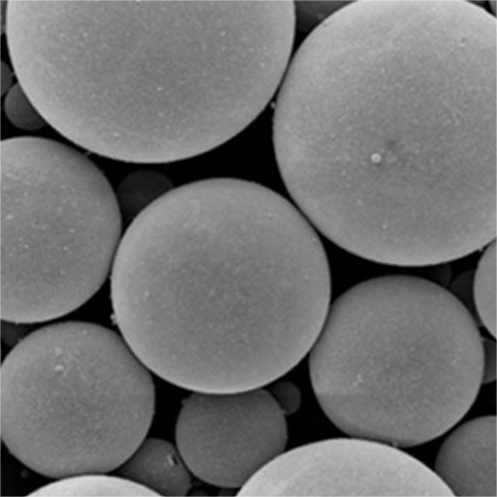
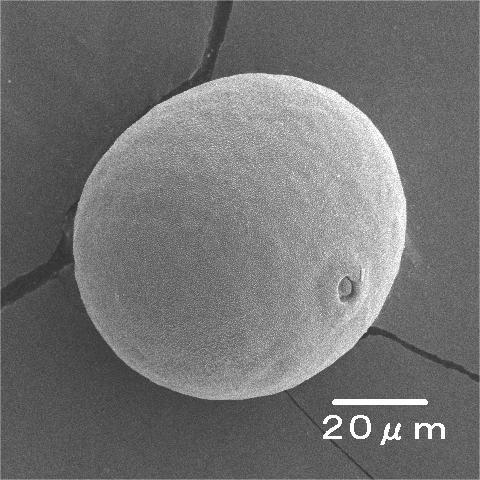
Hollow Microsphere Structure   Cenosphere SEM Structure

Typical Applications

▸ Unsaturated polyester resin systems

▸ Artificial stone filler and cast resin products

▸ Lightweight resin filler and casting filler applications

▸ Decorative resin panels and molded resin products

▸ Weight reduction filler for resin-rich formulations

Chemical Composition & Physical Properties

Chemical Analysis (Typical)
SiO₂ 50-60%
Al₂O₃ 25-40%
Fe₂O₃ 1-6% / low iron grade available
CaO 1-1.5%
Physical Properties
Shape Hollow spherical powder
Color Light grey to white
Particle Size 100 Mesh Through
True Density Approx. 0.80-0.85 g/cm³
Recommended Use Polyester resin systems, artificial stone, casting filler, and weight-reduction applications
Bulk Density Grade dependent
Customization Surface treatment and particle size selection available on request

Technical Documents

CENOSPHERE TDS — general technical data for polyester resin filler evaluation and customer documentation.

▸ Coating Grade Specification Sheet — particle size distribution, pH, iron content, and coating-grade controls.

Packaging & Delivery

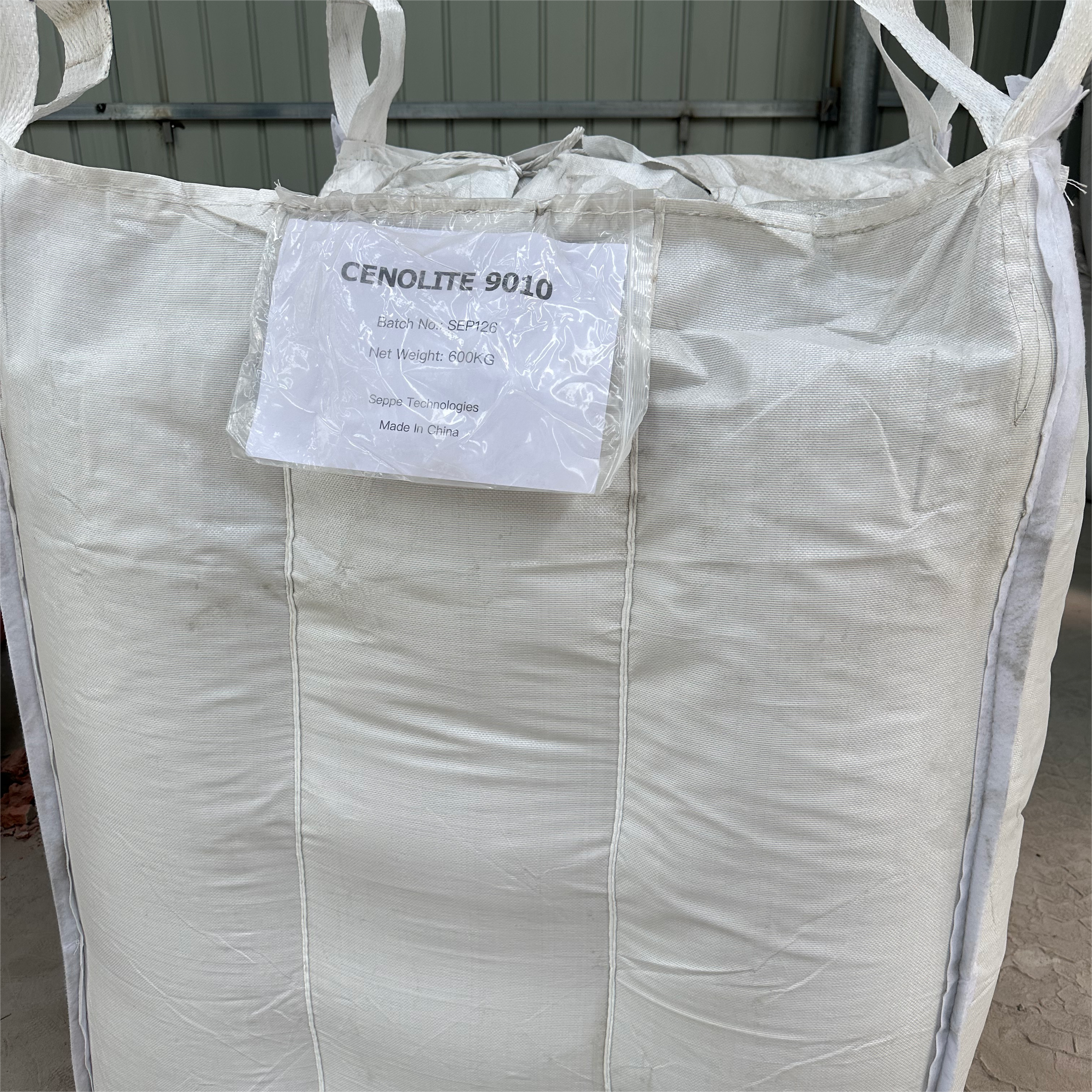
▸ 600 kg jumbo bags — approximately 20 bags per 40' High Cube FCL, depending on grade and loading plan.

▸ Custom packaging, palletizing, and private labeling are available upon request.

▸ Store sealed in dry conditions. Reliable container shipment is available to major ports worldwide.

FAQ

❓ Why use cenospheres in polyester resin?

▸ Cenospheres reduce resin compound density while providing stable hollow ceramic filling and volume efficiency.

❓ Is 100 Mesh Through suitable for artificial stone?

▸ Yes. The fine screened grade can be evaluated in artificial stone and cast resin products where smooth filling and lower weight are required.

❓ Can it reduce resin consumption?

▸ It can improve volume filling efficiency, but final resin demand depends on dosage, viscosity, and formulation design.

❓ Do I need surface treatment?

▸ Surface treatment can be discussed if stronger resin bonding or improved dispersion is required.

❓ Can SEPPE provide samples?

▸ Yes. Samples, TDS, and batch COA can be provided for resin formulation trials.

Need Samples or Custom Specifications?

Contact SEPPE for product specifications, samples, formulation trials, OEM packaging, and bulk pricing.

Request a Quote

Coating Grade Cenosphere Quality Control System

SEPPE operates a fully integrated ISO 9001:2015 certified quality management system for coating grade cenospheres. Every batch undergoes rigorous testing to ensure particle size consistency, low iron content, excellent dispersion, and compliance with coating performance requirements.


★ ISO 9001:2015 Certified
◆ Particle Size Verification
★ Low Iron Content Control
◆ Coating Performance Test
★ Full Batch Traceability
◆ Digital COA Available
Independent Laboratory Verification · On-Site Quality Audits · 24/7 Technical Support

End-to-End Quality Control Process

Our quality control system ensures every batch meets exact coating application requirements, from raw material verification to final shipment.

01
Raw Material Inspection
Verify fly ash source
Chemical composition test
Physical property screening
02
Separation & Purification
Floatation separation
Magnetic iron removal
Precision size classification
03
In-Process Testing
Real-time density monitoring
Particle size analysis
Iron content check

04

Final Batch Inspection
Particle size verification
Iron content verification
Coating performance test
05
Packaging & Shipment
Package integrity check
Batch labeling verification
Container loading supervision

Coating Grade (CENOLITE 910) Testing Standards

Test Parameter Test Method Specification Frequency
Particle Size Distribution ISO 13320:2009 (Laser Diffraction) D50=45-60μm, D98=105-140μm Every Batch
pH Value ISO 787-9 (10% Aqueous Suspension) 7.0 ± 1.0 Every Batch
Iron Content (Fe₂O₃) X-Ray Fluorescence (XRF) < 6% Every Batch
True Density ISO 787-10 (Pycnometer) 0.70-0.90 g/cm³ Every Batch
Moisture Content ISO 787-2 (105°C, 2h) ≤ 0.3% Every Batch
Chemical Composition X-Ray Fluorescence (XRF) SiO₂ 55-65%, Al₂O₃ 27-33% Every 3 Batches
Dispersion Test High-Speed Mixing + Hegman Gauge No agglomeration, uniform dispersion Monthly

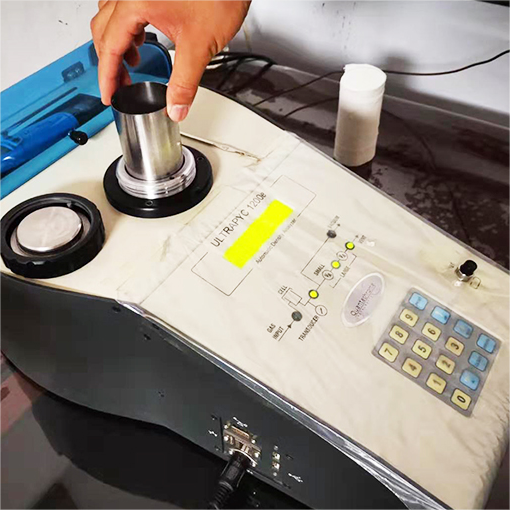
Core Testing Equipment

Our lab is equipped with state-of-the-art instruments for coating-grade cenospheres:

• Laser Particle Size Analyzer – ensures narrow PSD for smooth coatings

• XRF Spectrometer – controls iron content and chemical consistency

• Hegman Gauge – evaluates pigment and filler dispersion quality

• High-Speed Disperser – simulates paint production conditions

• Moisture Analyzer – accurate moisture content determination

 Hydraulic Pressure Tester    Digital Density Analyzer   Hydraulic Pressure Tester

Quality Assurance & Traceability

▸Every batch of CENOLITE 910 is verified for the following critical parameters:

Particle size distribution – laser diffraction per ISO 13320 ensures D50=45-60μm, D98=105-140μm for optimal film smoothness and packing.

Iron content (Fe₂O₃) – controlled below 6% via XRF to maintain low color interference and high brightness in light-toned paints.

pH stability – 10% aqueous suspension tested per ISO 787-9, maintained at 7.0 ± 1.0 to ensure resin and additive compatibility.

Density consistency – true density checked per ISO 787-10 (0.70-0.90 g/cm³) to guarantee predictable loading and lightweight performance.

Dispersion performance – high-speed mixing and Hegman gauge test confirm no agglomeration, ensuring uniform incorporation in paint systems.

Download Technical Documents

• For initial introduction and bidding documents
• Detailed particle size distribution, pH, and iron content

FAQ – Coating Grade Cenospheres

❓ What is the typical particle size range for CENOLITE 910?

▸ D50 = 45-60 μm, D98 = 105-140 μm, optimized for thin-film and industrial coatings.

❓ Why is iron content important for coating applications?

▸ Low iron (≤6%) ensures lighter color and better opacity, especially for white or light-colored paints and primers.

❓ Do you test dispersion performance?

▸ Yes, every batch is tested with high-speed mixing and Hegman gauge to ensure no agglomeration and uniform dispersion in paint systems.

❓ Can you provide a COA with every shipment?

▸ Yes, each shipment includes a digital Certificate of Analysis with batch-specific test results.

❓ Can you customize particle size for a specific coating resin?

▸ Yes, we offer custom cuts (e.g., D50=30-40μm for high-gloss finishes) upon request.

Need Custom Coating Grade Specifications?

Contact our coating specialists to discuss custom PSD, iron content targets, or to request batch samples for your formulation.

Contact Coating Team