Views: 272 Author: CENOLITE Publish Time: 2026-08-18 Origin: SEPPETECH
Cenospheres are used as lightweight solid additives when a cementing program needs a lower slurry density without adding more water. For this job, “cenosphere” is not a complete purchase description. SEPPE CenoLite 8540 is a 0-500 μm oilfield grade, and its published TDS is the starting point for batch review and slurry qualification.
CENOSPHERE 8540 Technical Data Sheet. The document identifies the material as CenoLite 8540 (0-500 μm), manufactured by SEPPE Technologies for oilfield cementing.
Open the CenoLite 8540 TDS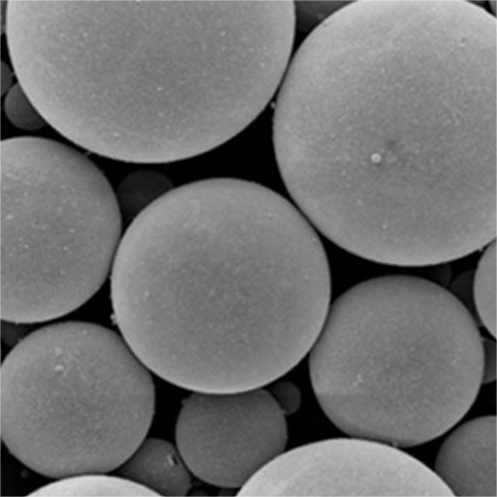
SEM image showing the spherical morphology and smooth shell surfaces of cenospheres.
The specification column is the proposed acceptance window. The typical column describes the reference value shown on Rev. 4.5; it is not a substitute for the batch result supplied with an order.
| TDS item | Specification | Typical | Buyer use |
|---|---|---|---|
| Floating rate | >95% | 98% | Initial buoyancy screen. |
| Moisture at 105°C | ≤0.3% | 0.2% | Dry handling and powder addition. |
| Bulk density | 0.30-0.45 | 0.39 g/cm³ | Bag and feeder planning. |
| True density | 0.80-0.85 | 0.83 g/cm³ | Formulation volume. |
| Shell chemistry | SiO₂ 50-60% Al₂O₃ 25-40% CaO 1-1.5% | 55.3% 37.6% 1.1% | Identity and batch comparison. |
The TDS reports cumulative retained values. Subtracting one cumulative value from the next gives a more useful view of the typical particle-size bands.
| Calculated band | Typical share | Derived from TDS |
|---|---|---|
| 250-500 μm | 8% | 8% at 250 μm; none above 500 μm. |
| 150-250 μm | 37% | 45% minus 8%. |
| 106-150 μm | 22% | 67% minus 45%. |
| 63-106 μm | 25% | 92% minus 67%. |
| Below 63 μm | 8% | Reported -240 mesh fraction. |
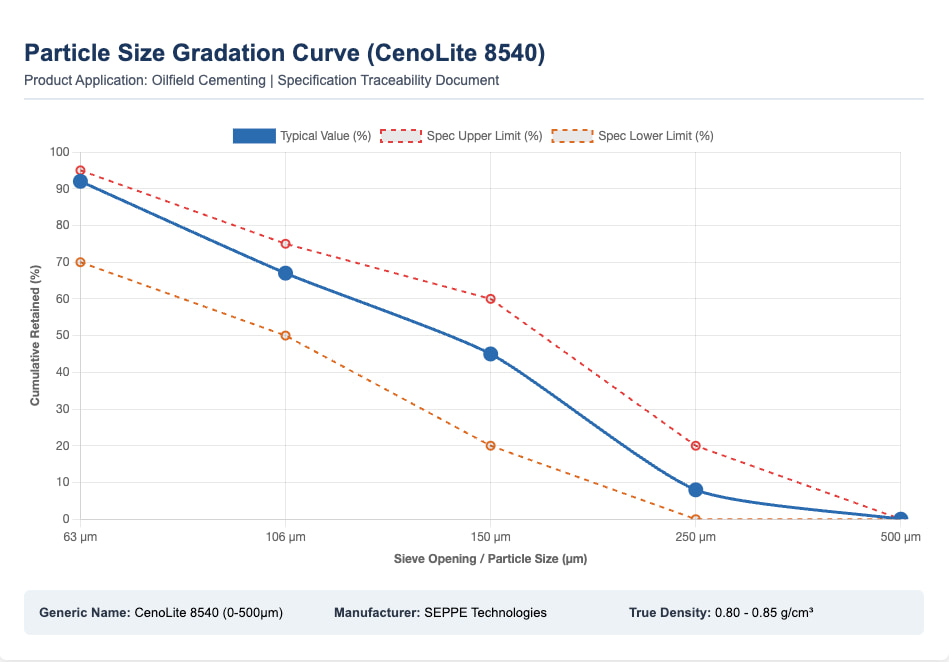
Fig. 2: Particle-size gradation for reading the calculated bands in the CenoLite 8540 TDS.
In the published typical curve, 84% of CenoLite 8540 lies between 63 and 250 μm. The coarse tail above 250 μm and the fine tail below 63 μm are both 8%. A shipment can therefore be compared with the reference curve instead of being described only as “0-500 μm.”
The TDS gives 0.39 g/cm³ as the typical bulk density and 0.83 g/cm³ as the typical true density. Using one value in place of the other will distort either the logistics estimate or the formulation calculation.
You can also read Cenosphere Bulk Density vs. True Density for a focused explanation of these two measurements.
600 kg divided by 390 kg/m³. Confirm bag dimensions and settling.
600 kg divided by 830 kg/m³. This is the formulation-volume basis.
CENOSPHERE 8540 lists ISO 787-10 beside both density lines. When density becomes a purchase limit, put the agreed value and the exact working procedure on the same document. This prevents a bulk-density result and a pycnometer-density result from being compared as if they were interchangeable.
The CenoLite 8540 requirement is above 95%, with 98% shown as typical. This helps identify material that sinks during the stated inspection. It does not show how many hollow particles remain intact after field mixing or pressure exposure.
The current CenoLite 8540 TDS does not publish a crush-pressure or pressure-survival value. An oilfield buyer should agree on a separate qualification test when shell survival is part of the cement program. The test conditions and acceptance limit belong on the enquiry or purchase specification.
Confirm CenoLite 8540 (0-500 μm), the TDS revision and the production batch number.
Check the actual floating rate, moisture, bulk density, true density and cumulative sieve results.
Record the cement system, additives, mixing order, target slurry density, test temperature and pressure.
Keep material from the approved lot for comparison with repeat deliveries.
For a repeat order, compare the new COA and retained sample with the approved lot before releasing the material to production.
Views: 272 Author: CENOLITE Publish Time: 2026-08-18 Origin: SEPPETECH
Cenospheres are used as lightweight solid additives when a cementing program needs a lower slurry density without adding more water. For this job, “cenosphere” is not a complete purchase description. SEPPE CenoLite 8540 is a 0-500 μm oilfield grade, and its published TDS is the starting point for batch review and slurry qualification.
CENOSPHERE 8540 Technical Data Sheet. The document identifies the material as CenoLite 8540 (0-500 μm), manufactured by SEPPE Technologies for oilfield cementing.
Open the CenoLite 8540 TDS SEM image showing the spherical morphology and smooth shell surfaces of cenospheres.
The specification column is the proposed acceptance window. The typical column describes the reference value shown on Rev. 4.5; it is not a substitute for the batch result supplied with an order.
| TDS item | Specification | Typical | Buyer use |
|---|---|---|---|
| Floating rate | >95% | 98% | Initial buoyancy screen. |
| Moisture at 105°C | ≤0.3% | 0.2% | Dry handling and powder addition. |
| Bulk density | 0.30-0.45 | 0.39 g/cm³ | Bag and feeder planning. |
| True density | 0.80-0.85 | 0.83 g/cm³ | Formulation volume. |
| Shell chemistry | SiO₂ 50-60% Al₂O₃ 25-40% CaO 1-1.5% | 55.3% 37.6% 1.1% | Identity and batch comparison. |
The TDS reports cumulative retained values. Subtracting one cumulative value from the next gives a more useful view of the typical particle-size bands.
| Calculated band | Typical share | Derived from TDS |
|---|---|---|
| 250-500 μm | 8% | 8% at 250 μm; none above 500 μm. |
| 150-250 μm | 37% | 45% minus 8%. |
| 106-150 μm | 22% | 67% minus 45%. |
| 63-106 μm | 25% | 92% minus 67%. |
| Below 63 μm | 8% | Reported -240 mesh fraction. |
Fig. 2: Particle-size gradation for reading the calculated bands in the CenoLite 8540 TDS.
In the published typical curve, 84% of CenoLite 8540 lies between 63 and 250 μm. The coarse tail above 250 μm and the fine tail below 63 μm are both 8%. A shipment can therefore be compared with the reference curve instead of being described only as “0-500 μm.”
The TDS gives 0.39 g/cm³ as the typical bulk density and 0.83 g/cm³ as the typical true density. Using one value in place of the other will distort either the logistics estimate or the formulation calculation.
You can also read Cenosphere Bulk Density vs. True Density for a focused explanation of these two measurements.
600 kg divided by 390 kg/m³. Confirm bag dimensions and settling.
600 kg divided by 830 kg/m³. This is the formulation-volume basis.
CENOSPHERE 8540 lists ISO 787-10 beside both density lines. When density becomes a purchase limit, put the agreed value and the exact working procedure on the same document. This prevents a bulk-density result and a pycnometer-density result from being compared as if they were interchangeable.
The CenoLite 8540 requirement is above 95%, with 98% shown as typical. This helps identify material that sinks during the stated inspection. It does not show how many hollow particles remain intact after field mixing or pressure exposure.
The current CenoLite 8540 TDS does not publish a crush-pressure or pressure-survival value. An oilfield buyer should agree on a separate qualification test when shell survival is part of the cement program. The test conditions and acceptance limit belong on the enquiry or purchase specification.
Confirm CenoLite 8540 (0-500 μm), the TDS revision and the production batch number.
Check the actual floating rate, moisture, bulk density, true density and cumulative sieve results.
Record the cement system, additives, mixing order, target slurry density, test temperature and pressure.
Keep material from the approved lot for comparison with repeat deliveries.
For a repeat order, compare the new COA and retained sample with the approved lot before releasing the material to production.