
Views: 268 Author: SEPROP Publish Time: 2026-08-06 Origin: SEPPE Technologies
Ceramic proppant is a key material used in hydraulic fracturing operations for oil and gas production. During fracturing treatment, proppant particles are pumped into underground fractures with fracturing fluid. After the pressure is released, the particles remain in place and help maintain open flow channels for hydrocarbons.

Hydraulic fracturing creates fractures in underground rock formations by injecting high-pressure fluid. When the fluid returns from the formation, these fractures may close because of surrounding pressure.
Proppants prevent fracture closure by creating a stable support structure. The open channels allow oil and natural gas to flow from the reservoir into the wellbore.
Different reservoirs require different proppant solutions. Natural sand is commonly used in lower-stress formations because of its availability and cost advantage. Ceramic proppants are selected when higher strength and conductivity retention are required.
| Material | Main Characteristics |
|---|---|
| Frac sand | Low cost and widely available. Suitable for many conventional applications. |
| Ceramic proppant | Higher crush resistance, controlled shape and stable conductivity under higher closure stress. |
A suitable ceramic proppant needs balanced physical properties to maintain fracture conductivity during long-term production.
Crush resistance: allows particles to withstand reservoir closure pressure.
Sphericity and roundness: improve packing efficiency and create better flow channels.
Acid resistance: helps maintain particle stability in challenging chemical environments.
Low turbidity: indicates cleaner particles with fewer surface impurities.
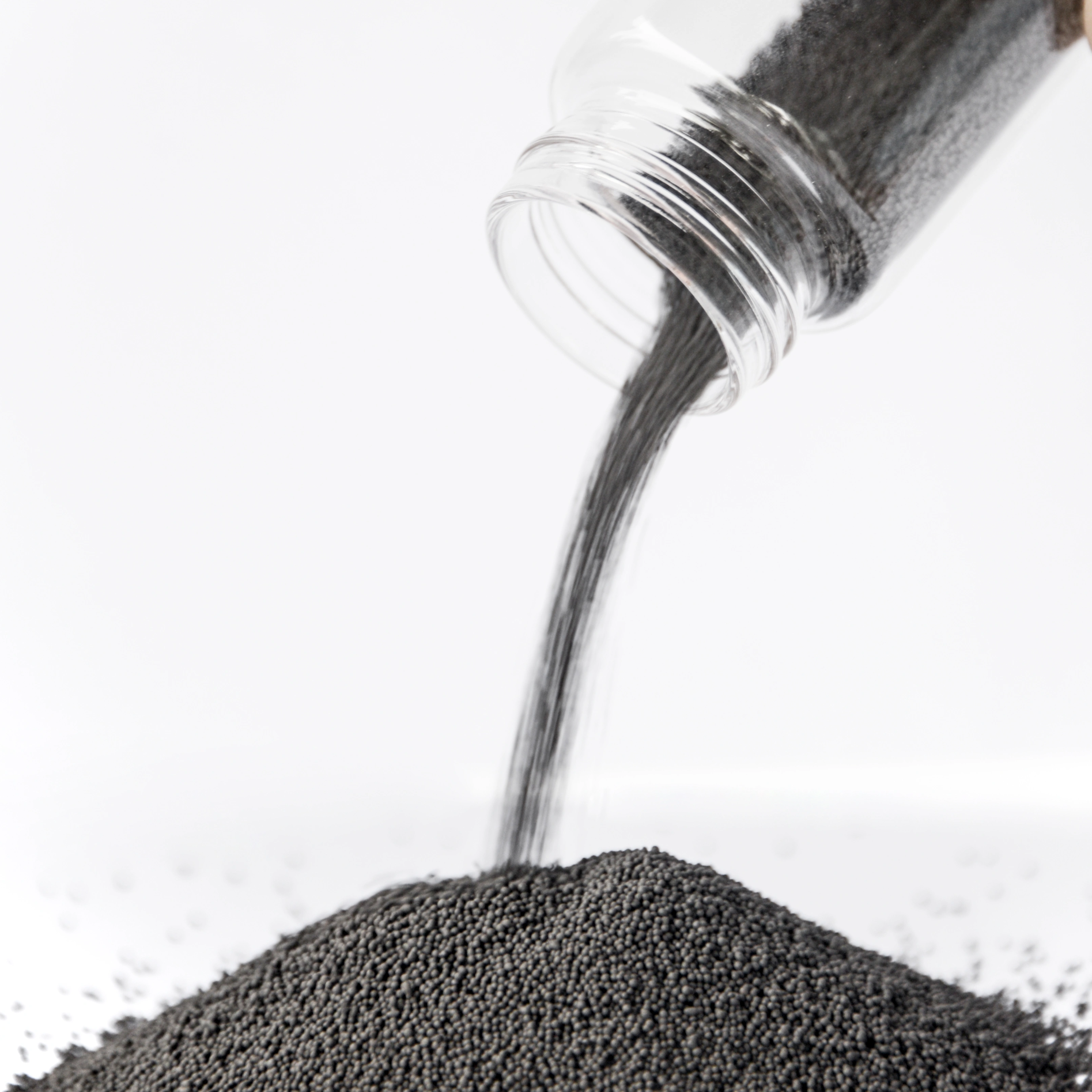
Ceramic proppants are commonly used in medium-depth and deep wells where higher closure stress places greater demands on particle strength.
Typical applications include shale gas development, tight oil reservoirs and other unconventional resources requiring reliable fracture conductivity.

SEPPE Proppants is a professional manufacturer of ceramic proppant such as Ultra lightweight, light weight proppant ( LWP ), Intermediate strength proppant ( ISP ) , Ultra-High density sintered bauxite proppant ( HSP ) that are used in the exploitation of hydraulic fracturing in gas&oil fields.
SEPPE has its own independent mining resource, modern production technique and advanced technical force. SEPPE proppants has good sphericity, smooth surface, high compressive strength, and perfect long term conductivity, which have fully exceeded the standards of ISO13503-2 and API 19C.
Views: 268 Author: SEPROP Publish Time: 2026-08-06 Origin: SEPPE Technologies
Ceramic proppant is a key material used in hydraulic fracturing operations for oil and gas production. During fracturing treatment, proppant particles are pumped into underground fractures with fracturing fluid. After the pressure is released, the particles remain in place and help maintain open flow channels for hydrocarbons.
Hydraulic fracturing creates fractures in underground rock formations by injecting high-pressure fluid. When the fluid returns from the formation, these fractures may close because of surrounding pressure.
Proppants prevent fracture closure by creating a stable support structure. The open channels allow oil and natural gas to flow from the reservoir into the wellbore.
Different reservoirs require different proppant solutions. Natural sand is commonly used in lower-stress formations because of its availability and cost advantage. Ceramic proppants are selected when higher strength and conductivity retention are required.
| Material | Main Characteristics |
|---|---|
| Frac sand | Low cost and widely available. Suitable for many conventional applications. |
| Ceramic proppant | Higher crush resistance, controlled shape and stable conductivity under higher closure stress. |
A suitable ceramic proppant needs balanced physical properties to maintain fracture conductivity during long-term production.
Crush resistance: allows particles to withstand reservoir closure pressure.
Sphericity and roundness: improve packing efficiency and create better flow channels.
Acid resistance: helps maintain particle stability in challenging chemical environments.
Low turbidity: indicates cleaner particles with fewer surface impurities.
Ceramic proppants are commonly used in medium-depth and deep wells where higher closure stress places greater demands on particle strength.
Typical applications include shale gas development, tight oil reservoirs and other unconventional resources requiring reliable fracture conductivity.
SEPPE Proppants is a professional manufacturer of ceramic proppant such as Ultra lightweight, light weight proppant ( LWP ), Intermediate strength proppant ( ISP ) , Ultra-High density sintered bauxite proppant ( HSP ) that are used in the exploitation of hydraulic fracturing in gas&oil fields.
SEPPE has its own independent mining resource, modern production technique and advanced technical force. SEPPE proppants has good sphericity, smooth surface, high compressive strength, and perfect long term conductivity, which have fully exceeded the standards of ISO13503-2 and API 19C.