You are here: Home » Products » CERAMIC PROPPANT » High Strength Proppant » High Strength Ceramic Proppant

Product Details

High Strength Ceramic Proppant

SEPHSP proppants have good sphericity, smooth surface, high compressive strength, and perfect long term conductivity.
Availability:
Quantity:
  • HSP 16/30, 20/40, 30/50, 40/70

  • SEPHSP

  • 69149000

High-density Proppant

SEPPE High-density Proppant is a high-strength sintered bauxite ceramic proppant designed for hydraulic fracturing projects requiring higher closure stress resistance, stable fracture conductivity and reliable performance in deeper or high-pressure wells. This grade is supplied under the SEPREM HSP series and is suitable for applications where intermediate-density proppant may not provide sufficient crush resistance.


★ SEPREM HSP Series
◆ Apparent Density 3.35 g/cm³
★ Bulk Density 1.82-1.83 g/cm³
◆ 0.9 × 0.9 Sphericity / Roundness
★ Tested up to 15,000 psi
◆ 16/30, 20/40, 30/50, 40/70
High Strength · High Closure Stress · Conductivity Support · 1.5 MT Export Bags

What Is High-density Proppant?

▸ High-density Proppant is a high-strength ceramic proppant used to keep hydraulic fractures open under higher closure stress conditions.

▸ The product provides higher apparent and bulk density than lightweight and intermediate-density proppants, making it suitable for deeper wells and more demanding pressure environments.

▸ SEPPE SEPREM HSP is designed for projects requiring controlled mesh distribution, high sphericity and roundness, strong crush resistance, conductivity support and high closure stress performance.

Key Product Characteristics

High-density Ceramic Design: Apparent density is approx. 3.35 g/cm³, absolute density is approx. 3.50 g/cm³, and bulk density is approx. 1.82-1.83 g/cm³.

Controlled Shape Quality: Typical sphericity and roundness are 0.9 × 0.9 by Krumbein and Sloss methods, supporting stable proppant packing and fracture flow capacity.

Crush Resistance: Crush-test data are available up to 15,000 psi across common mesh sizes, supporting technical selection for high closure-stress applications.

Conductivity & Permeability: Conductivity and permeability data are available across 16/30, 20/40, 30/50 and 40/70 sizes under different closure pressure points.

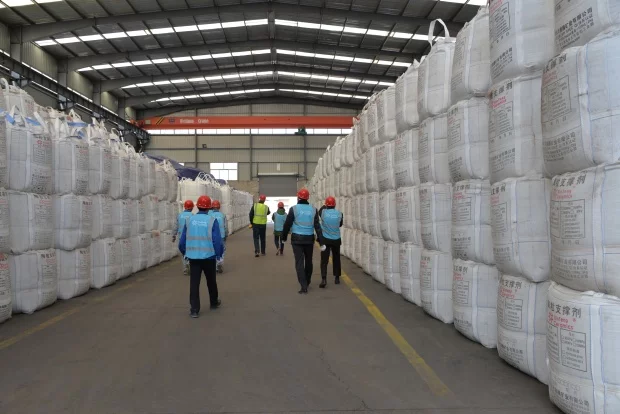
Export Packaging: Standard packing is 1.5 MT polypropylene bags, with packaging and shipment arrangements available according to order requirements.

Technical Data Overview

Item 16/30 20/40 30/50 40/70
Average Diameter 0.940 mm 0.680 mm 0.440 mm 0.310 mm
Sphericity × Roundness 0.9 × 0.9 0.9 × 0.9 0.9 × 0.9 0.9 × 0.9
Apparent Density 3.35 g/cm³ 3.35 g/cm³ 3.35 g/cm³ 3.35 g/cm³
Absolute Density 3.50 g/cm³ 3.50 g/cm³ 3.50 g/cm³ 3.50 g/cm³
Bulk Density 1.82 g/cm³ 1.82 g/cm³ 1.83 g/cm³ 1.83 g/cm³
Closure Stress Review Up to 15,000 psi Up to 15,000 psi Up to 15,000 psi Up to 15,000 psi

Typical Applications

▸ Hydraulic fracturing projects requiring high-density ceramic proppant

▸ Deeper wells and high-pressure reservoirs requiring stronger crush resistance

▸ Vertical wells and formations involving closure pressure requirements up to 15,000 psi

▸ Projects requiring 16/30, 20/40, 30/50 or 40/70 proppant size selection

▸ Fracturing designs where high crush resistance, particle shape, and conductivity retention are key selection factors

Quality Control Summary

▸ Key quality checks include particle size analysis, sphericity, roundness, apparent density, absolute density, bulk density, crush resistance, acid solubility, turbidity, chemical analysis, conductivity and permeability.

▸ Detailed batch control, COA, TDS data, retained samples and third-party inspection options are available on the High-density Proppant Quality Control System page.

Packaging & Delivery

▸ Standard packing is 1.5 MT polypropylene bags. Other packaging and loading arrangements can be discussed according to order requirements.

▸ SEPPE supports export packaging, container loading, batch identification and shipment documentation for bulk high-density proppant orders.

High-density proppant jumbo bags High-density proppant bags prepared for shipment High-density proppant container loading High-density ceramic proppant bulk bags in warehouse

FAQ

❓ How is High-density Proppant selected?

▸ Selection should be based on closure stress, conductivity target, reservoir pressure, well depth, mesh size, pumping design and customer purchase specification.

❓ How is it different from Intermediate-density Proppant?

▸ High-density Proppant has higher density and stronger pressure performance than intermediate-density proppant and is selected when closure stress requirements are more demanding.

❓ What mesh sizes are available?

▸ Common high-density proppant sizes include 16/30, 20/40, 30/50 and 40/70. Final availability should be confirmed according to order requirements.

❓ Can SEPPE provide TDS and test data?

▸ Yes. SEPPE can provide TDS, particle size distribution, density, crush test data, conductivity and permeability information, packing details and batch inspection records.

❓ Is third-party inspection available?

▸ Yes. Third-party inspection or project-specific testing can be arranged according to customer requirements and purchase specification.

Need High-density Proppant Specifications?

Contact SEPPE to discuss mesh size, closure stress, conductivity target, TDS data, samples, packaging and bulk pricing.

Request a Quote

High-density Proppant Quality Control System

SEPPE High-density Proppant quality control system is designed for the SEPREM HSP series. It covers raw material review, ceramic production control, particle size classification, density testing, crush resistance testing up to 15,000 psi, conductivity and permeability review, batch documentation, packaging verification and shipment traceability.

QC Scope
Production, testing, documentation, packaging and loading inspection for SEPREM HSP high-density proppant orders.
Main Test Focus
Particle size, sphericity, roundness, apparent density, absolute density, bulk density, crush resistance, acid solubility, conductivity and permeability.
Batch Documents
TDS, batch COA, retained samples, inspection records, loading checks, third-party inspection support and shipment documentation.

QCS Overview

SEPREM HSP high strength proppant particles
01 · SEPREM HSP Grade Review
High-density ceramic proppant for severe closure stress

SEPREM HSP is reviewed as a high-density ceramic proppant grade for projects requiring stronger crush resistance and high closure stress performance.

• Apparent density: approx. 3.35 g/cm³
• Bulk density: approx. 1.82-1.83 g/cm³
• Tested up to 15,000 psi closure stress
High-density proppant laboratory testing
02 · Laboratory Testing
Density, shape and physical property review

Each batch can be checked against SEPREM HSP TDS values, including apparent density, absolute density, bulk density, sphericity, roundness, acid solubility and turbidity.

• Absolute density: approx. 3.50 g/cm³
• Sphericity × roundness: 0.9 × 0.9
• Batch inspection records available
High-density proppant quality inspection center
03 · Size Classification
Mesh control for high-pressure fracturing designs

Screen analysis is used to control particle size distribution, oversize, undersize and fines for common high-density proppant mesh sizes.

• 16/30, 20/40, 30/50, 40/70
• Particle size distribution review
• Fines and off-size particle control
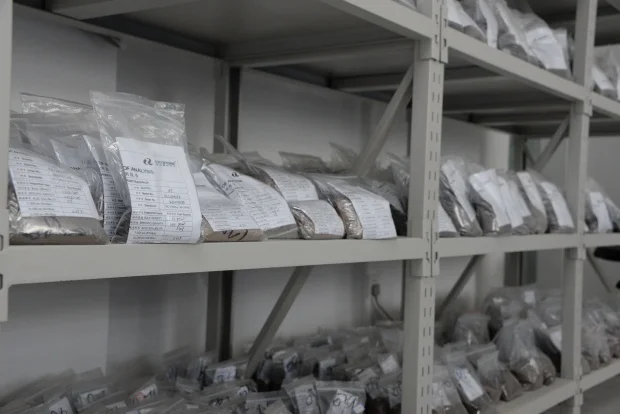
SEPREM HSP performance review sample shelf
04 · Performance Review
Crush resistance and conductivity support

Crush fines are reviewed by mesh size and closure stress up to 15,000 psi. Conductivity and permeability data can be reviewed by mesh size and closure pressure for project evaluation.

• Crush resistance testing up to 15,000 psi
• Conductivity and permeability data
• Project-specific technical review
High-density proppant export bags and batch traceability
05 · Packaging & Traceability
Batch release before shipment

Standard packing is 1.5 MT polypropylene bags. Package identification, batch number, bag weight check, retained samples and loading records support shipment traceability.

• Batch COA and TDS support
• Bag weight and loading check
• Third-party inspection upon request

High-density Proppant QC Reference

QC Item Reference Value / Control Purpose
Available Sizes 16/30, 20/40, 30/50, 40/70 Match fracture design and pumping program.
Sphericity × Roundness 0.9 × 0.9 by Krumbein and Sloss methods Support stable packing and conductivity.
Apparent Density Approx. 3.35 g/cm³ Confirm high-density ceramic proppant grade.
Absolute Density Approx. 3.50 g/cm³ Support material consistency review.
Bulk Density Approx. 1.82-1.83 g/cm³ Support transport, storage and placement evaluation.
Crush Resistance Crush fines reviewed up to 15,000 psi Confirm fines generated under closure stress.
Conductivity Data Available by mesh size and closure pressure point Review fracture flow capacity.
Permeability Data Available with conductivity test records upon request Support project evaluation and technical comparison.

Testing Items

Particle Size Analysis
Confirms mesh distribution, retained percentage, fines control and product size consistency for 16/30, 20/40, 30/50 and 40/70.
Density Testing
Apparent density, absolute density and bulk density are checked to confirm SEPREM HSP batch consistency.
Crush Resistance
Crush test results are reviewed by mesh size and stress level up to 15,000 psi.
Conductivity & Permeability
Conductivity and permeability data can be reviewed across mesh sizes and closure pressure points to support project evaluation.
Chemical Analysis
Chemical composition, acid solubility and turbidity can be documented according to TDS, batch COA and customer specification.
Packaging Verification
Bag weight, package identification, retained samples and loading records support shipment traceability.

Quality Assurance & Traceability

• Each shipment can be supplied with batch inspection records and Certificate of Analysis according to order requirements.

• Batch number, production date, package identification, retained samples, bag weight checks and loading verification support shipment traceability.

• Third-party inspection or project-specific testing can be arranged before shipment according to customer requirements.

• Custom QC protocols can be discussed according to mesh size, closure stress, project specification, purchase requirement and documentation needs.

Download / Request Technical Documents

SEPREM HSP-TDS.pdf with physical analysis, crush test, particle size analysis, chemical analysis, conductivity and permeability data

• Batch COA with particle size, density, crush resistance, chemical analysis and related quality data

• Third-party inspection, packaging and loading records available upon request

Need High-density Proppant QC Documents?

Contact SEPPE to request TDS, batch COA, particle size data, crush test information, conductivity and permeability data, packaging records, or third-party inspection.

Contact Technical Team