| Quantity: | |
|---|---|
ISP 16/30, 20/40, 30/50, 40/70
SEPROP
69149000
SEPPE Intermediate Strength Ceramic Proppant is a SEPROP ISP 20/40 mesh ceramic proppant for hydraulic fracturing projects requiring intermediate-density performance, stronger crush resistance than lightweight proppant and stable fracture conductivity support.
▸ Intermediate Strength Ceramic Proppant is an intermediate-strength ceramic proppant in the SEPROP ISP series, used to keep hydraulic fractures open after fracturing pressure is released.
▸ This product is positioned around ISP 20/40, with intermediate-density ceramic performance for projects requiring stronger crush resistance than lightweight proppant.
▸ It is suitable for hydraulic fracturing projects where controlled mesh distribution, high sphericity and roundness, conductivity support and balanced density-strength performance are required.
▸ ISP 20/40 Mesh Focus: A coarser intermediate-strength ceramic proppant option for designs requiring stronger conductivity support.
▸ Intermediate-density Ceramic Design: Apparent density is approx. 3.25-3.26 g/cm³, absolute density is approx. 3.40 g/cm³, and bulk density is approx. 1.74-1.75 g/cm³.
▸ 12,500 psi Class: Crush-test data can be reviewed up to 12,500 psi according to mesh size and customer purchase specification.
▸ Controlled Shape Quality: Typical sphericity and roundness are 0.9 × 0.9, supporting stable packing and fracture flow capacity.
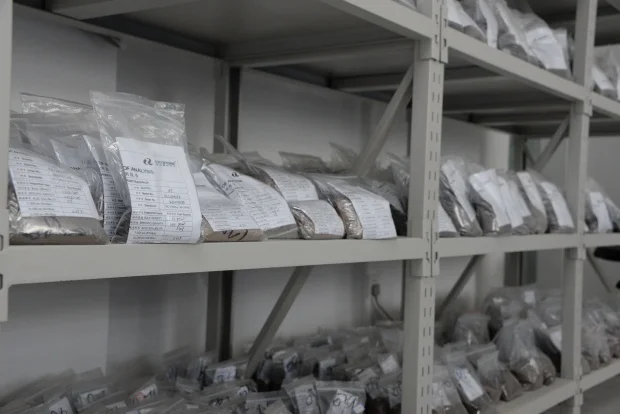
▸ Technical Data Support: TDS, batch COA, particle size data, crush test information, conductivity and permeability data can be provided for project evaluation.
▸ Hydraulic fracturing projects requiring ISP 20/40 ceramic proppant
▸ Moderate to higher closure-stress reservoirs
▸ Fracture designs requiring coarser particle size and conductivity support
▸ Oil and gas wells requiring intermediate-strength proppant
▸ Key quality checks include particle size analysis, sphericity, roundness, apparent density, absolute density, bulk density, crush resistance, acid solubility, turbidity, chemical analysis, conductivity and permeability.
▸ Detailed batch control, COA, TDS data, retained samples and third-party inspection options are available on the Intermediate-density Proppant Quality Control System page.
▸ SEPPE ISP-SEPROP TDS — physical analysis, crush test, particle size analysis, chemical analysis, conductivity and permeability data.
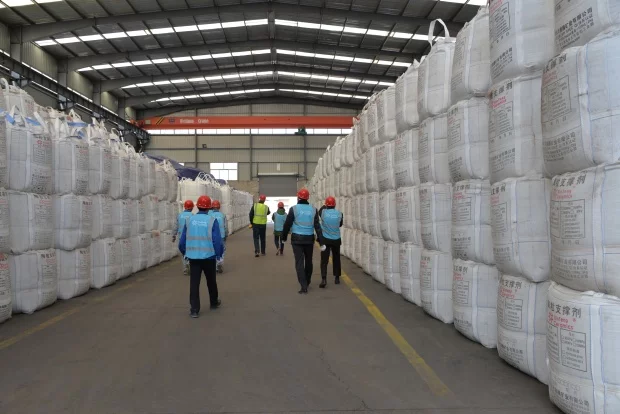
▸ Standard packing is 1.5 MT polypropylene bags. Other packaging and loading arrangements can be discussed according to order requirements.
▸ SEPPE supports export packaging, container loading, batch identification and shipment documentation for bulk intermediate-density proppant orders.
▸ Selection should be based on closure stress, conductivity target, reservoir conditions, mesh size, pumping design and customer purchase specification. ISP 20/40 is the main model focus of this page.
▸ Yes. ISP intermediate-strength proppant has higher density and stronger pressure performance than lightweight proppant and is selected when the project requires higher closure-stress resistance.
▸ Yes. SEPPE can provide TDS, particle size distribution, density, crush test data, conductivity and permeability information, packing details and batch inspection records.
Contact SEPPE to discuss mesh size, closure stress, conductivity target, TDS data, samples, packaging and bulk pricing.
Request a Quote