Views: 333 Author: RKB Publish Time: 2026-09-10 Origin: SEPPE Technologies
Do you know what PSV means?Simply put, in road engineering, a higher PSV (Polished Stone Value) indicates a more durable and scratch-resistant surface.
It's easy to see how crucial this indicator is for road safety!
SEPPE 1–3 mm high-friction calcined bauxite is a hard, angular aggregate developed for resin-bonded anti-slip road surfacing and High Friction Surfacing (HFS).
The controlled 1–3 mm grading supports uniform broadcast application, resin contact and a consistent surface texture. Final suitability should be confirmed against the selected binder system, project specification and current SEPPE test documentation.
Resistance to polishing under repeated traffic.
Typically 82–85% for the designated 80-grade material.
Angular aggregate for compatible resin-bonded systems.
Specified material tested below 1% crystalline silica
This result refers specifically to crystalline silica in the tested bulk material; it is not the same as total SiO₂ and does not mean silica-free or dust-free. Review the applicable laboratory report, Safety Data Sheet and batch documentation, and continue to use appropriate dust-control and handling procedures.
In a compatible HFS system, calcined bauxite aggregate is broadcast over an epoxy, polyurethane or other approved resin binder to create a durable, textured wearing surface. The 1–3 mm fraction is commonly considered for intersections, approaches to pedestrian crossings, roundabouts, bridge decks, ramps, cycleways, bus lanes and other locations requiring enhanced surface friction.

First, with a Mohs hardness of 8–9, it is extremely resistant to grinding down or crushing by vehicle tires.Second, it possesses exceptional resistance to polishing; even under the intense, repeated pressure of tens of thousands of heavy trucks daily, its microscopic surface roughness remains intact rather than becoming smooth.
Furthermore, the crushed and screened bauxite particles are angular in shape; under extreme wear, they do not wear down into smooth spheres but instead continuously expose new, sharp edges—a property known as "self-sharpening"—thereby maintaining superior grip over the long term.
Finally, the material features very low water absorption and high chemical stability; high-temperature calcination completely eliminates water of crystallization, resulting in extremely low porosity, so it does not soften or delaminate because of water absorption during rain or snow.
Particle size should be selected according to the binder system, target texture, application rate, traffic conditions and project specification.
For compatible resin-bonded high-friction systems, pedestrian crossings, ramps, cycleways, bus lanes and selected road-safety applications.
The light buff colour provides a practical base for compatible pigmented resin systems. It can be considered for cycle lanes, pedestrian areas, bus lanes, school zones and visual-warning surfaces where both colour and surface texture are required.
Colour appearance depends on the aggregate, pigment, resin, application rate and UV exposure. Approve a representative sample or trial area before full installation.
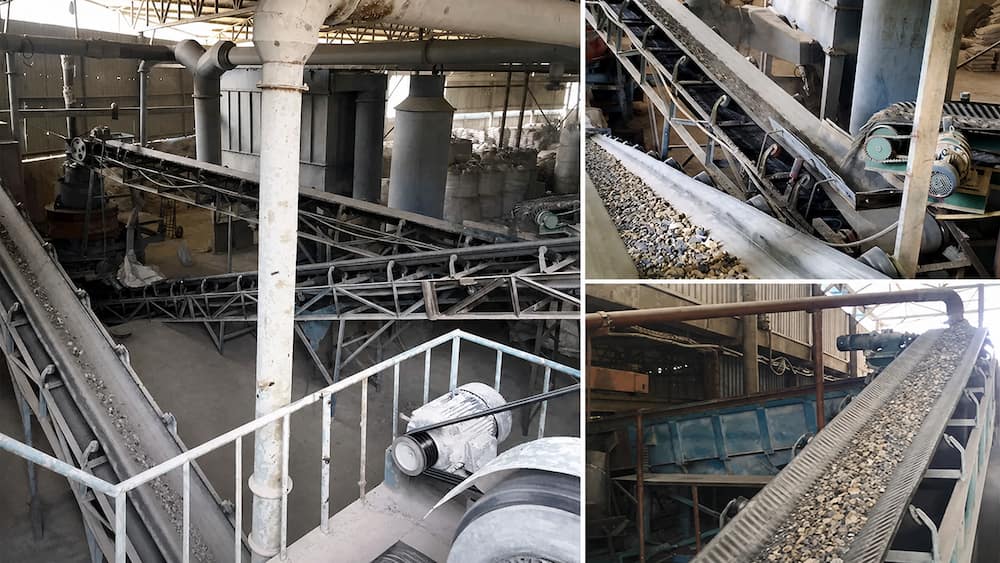
The designated 80-grade material is produced through shaft-kiln calcination followed by crushing, screening and separation. Quality review covers chemical composition, crystalline silica documentation, PSV, particle-size distribution and packaging condition according to the agreed product specification.
Review the product specification, request current PSV and crystalline silica documentation, or arrange a representative sample for your binder and surface trial.
View 1–3 mm Product Request Reports & SamplesViews: 333 Author: RKB Publish Time: 2026-09-10 Origin: SEPPE Technologies
Do you know what PSV means?Simply put, in road engineering, a higher PSV (Polished Stone Value) indicates a more durable and scratch-resistant surface.
It's easy to see how crucial this indicator is for road safety!
SEPPE 1–3 mm high-friction calcined bauxite is a hard, angular aggregate developed for resin-bonded anti-slip road surfacing and High Friction Surfacing (HFS).
The controlled 1–3 mm grading supports uniform broadcast application, resin contact and a consistent surface texture. Final suitability should be confirmed against the selected binder system, project specification and current SEPPE test documentation.
Resistance to polishing under repeated traffic.
Typically 82–85% for the designated 80-grade material.
Angular aggregate for compatible resin-bonded systems.
Specified material tested below 1% crystalline silica
This result refers specifically to crystalline silica in the tested bulk material; it is not the same as total SiO₂ and does not mean silica-free or dust-free. Review the applicable laboratory report, Safety Data Sheet and batch documentation, and continue to use appropriate dust-control and handling procedures.
In a compatible HFS system, calcined bauxite aggregate is broadcast over an epoxy, polyurethane or other approved resin binder to create a durable, textured wearing surface. The 1–3 mm fraction is commonly considered for intersections, approaches to pedestrian crossings, roundabouts, bridge decks, ramps, cycleways, bus lanes and other locations requiring enhanced surface friction.
First, with a Mohs hardness of 8–9, it is extremely resistant to grinding down or crushing by vehicle tires.Second, it possesses exceptional resistance to polishing; even under the intense, repeated pressure of tens of thousands of heavy trucks daily, its microscopic surface roughness remains intact rather than becoming smooth.
Furthermore, the crushed and screened bauxite particles are angular in shape; under extreme wear, they do not wear down into smooth spheres but instead continuously expose new, sharp edges—a property known as "self-sharpening"—thereby maintaining superior grip over the long term.
Finally, the material features very low water absorption and high chemical stability; high-temperature calcination completely eliminates water of crystallization, resulting in extremely low porosity, so it does not soften or delaminate because of water absorption during rain or snow.
Particle size should be selected according to the binder system, target texture, application rate, traffic conditions and project specification.
For compatible resin-bonded high-friction systems, pedestrian crossings, ramps, cycleways, bus lanes and selected road-safety applications.
The light buff colour provides a practical base for compatible pigmented resin systems. It can be considered for cycle lanes, pedestrian areas, bus lanes, school zones and visual-warning surfaces where both colour and surface texture are required.
Colour appearance depends on the aggregate, pigment, resin, application rate and UV exposure. Approve a representative sample or trial area before full installation.
The designated 80-grade material is produced through shaft-kiln calcination followed by crushing, screening and separation. Quality review covers chemical composition, crystalline silica documentation, PSV, particle-size distribution and packaging condition according to the agreed product specification.
Review the product specification, request current PSV and crystalline silica documentation, or arrange a representative sample for your binder and surface trial.
View 1–3 mm Product Request Reports & Samples