Views: 0 Author: SEPPE STEEL Publish Time: 2026-10-20 Origin: SEPPPE Tech
For high-carbon cast-steel grit and shot, chemical analysis is an important part of composition quality control. It is not only a routine laboratory test; it also helps manufacturers verify whether the material meets specified requirements.
The reliability of test results depends first on whether samples are representative. Samples should be taken from the batch under inspection according to the established sampling procedure and mixed as required by the test method. This helps prevent sampling errors from making the results unrepresentative of the batch.
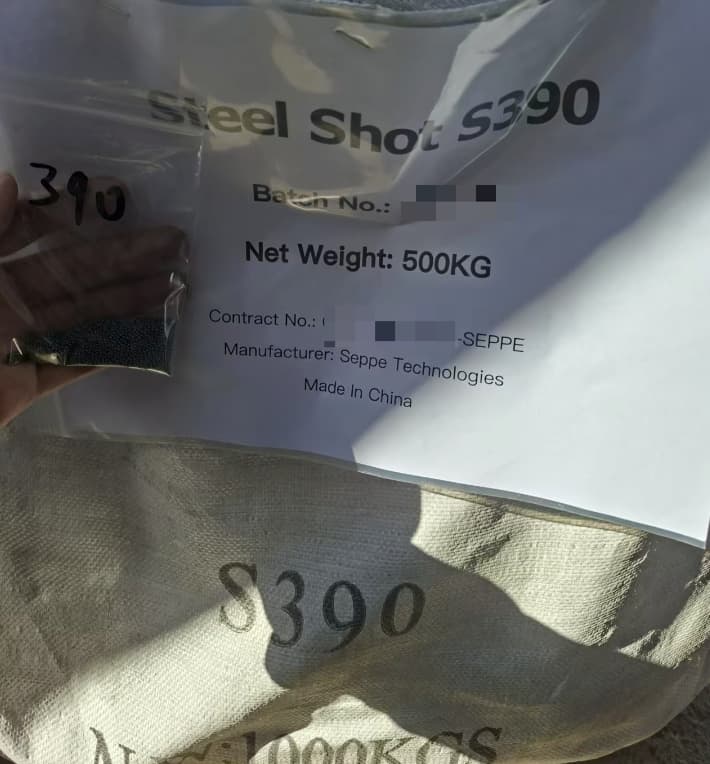
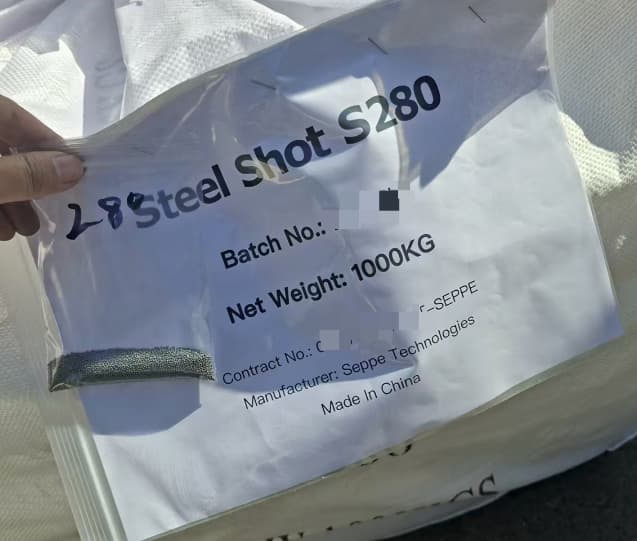
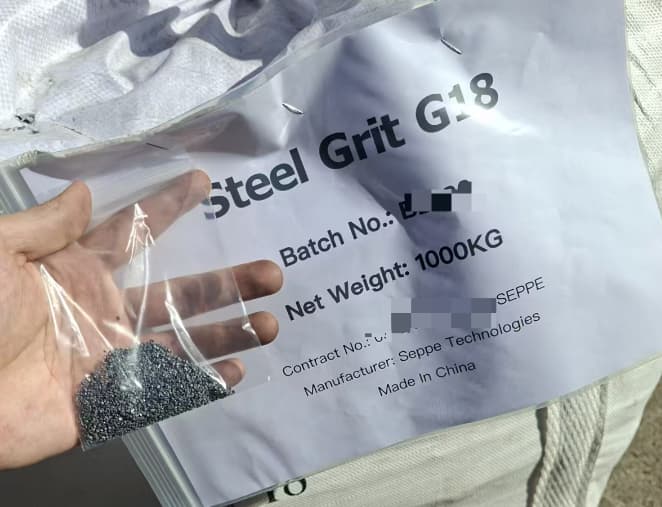
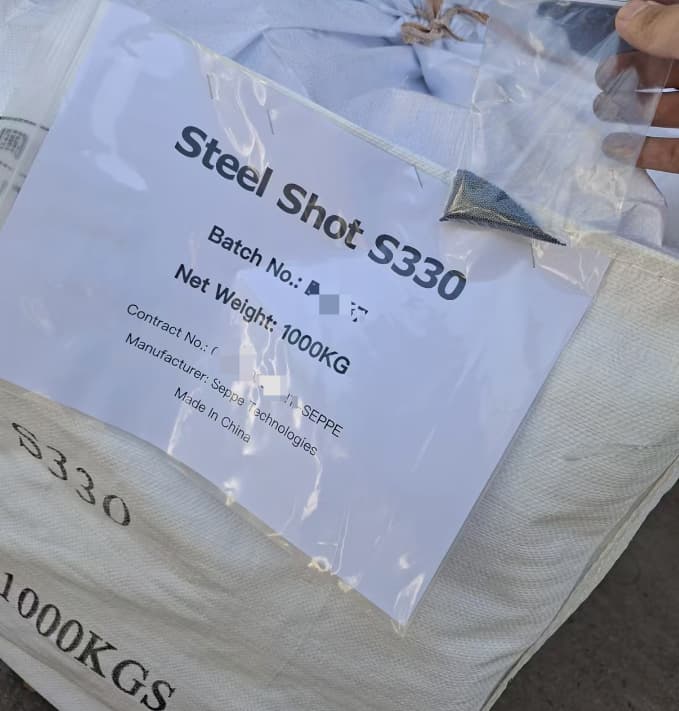
Elemental analysis typically uses a high-frequency infrared carbon-sulfur analyzer. A weighed sample of steel grit or shot is placed in a high-frequency induction furnace and burned in an oxygen-rich atmosphere. Carbon and sulfur in the sample are converted into carbon dioxide and sulfur dioxide. The gases then pass through infrared detection cells, where absorption at specific wavelengths is measured to calculate the mass fractions of carbon and sulfur.
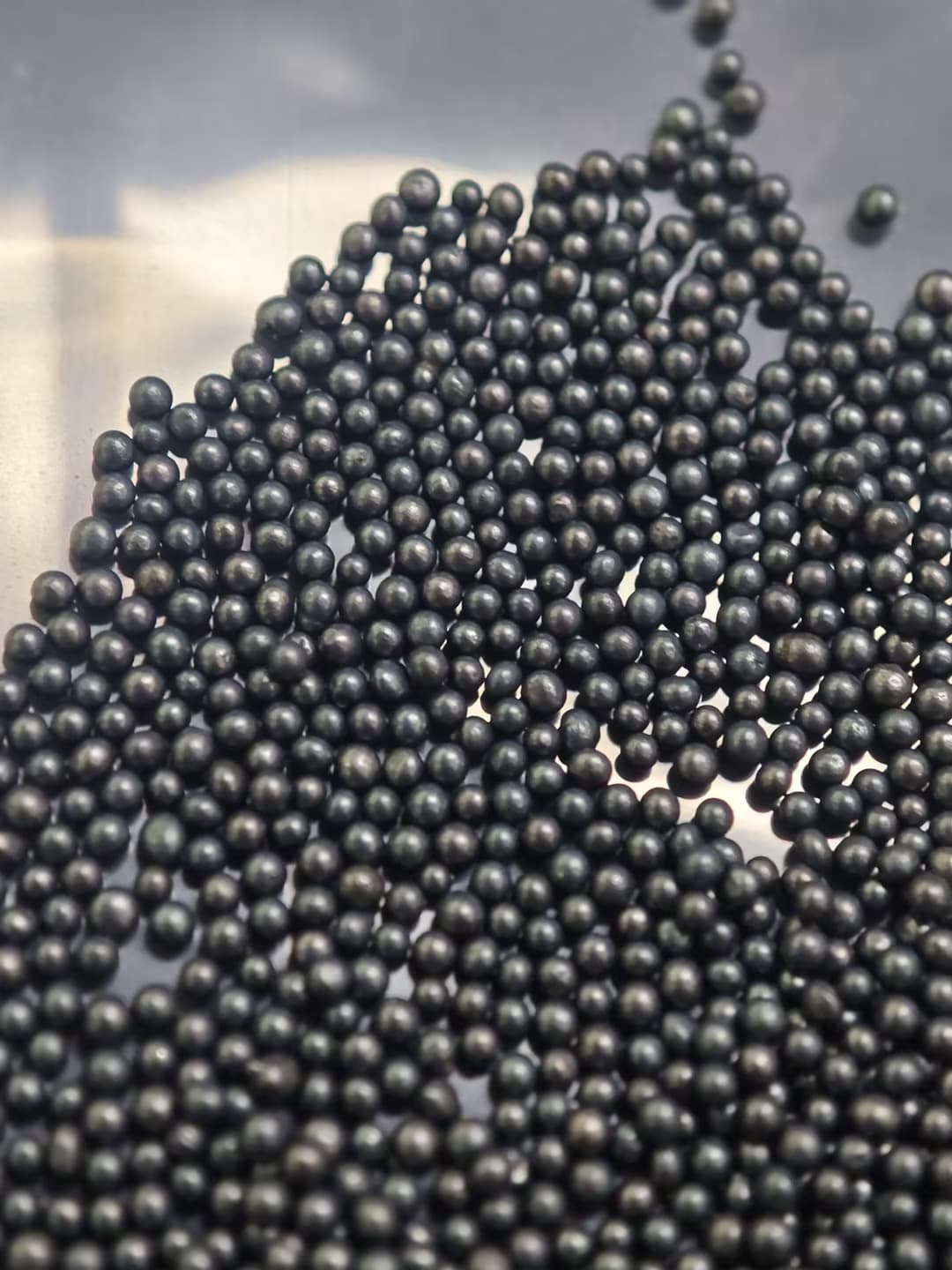
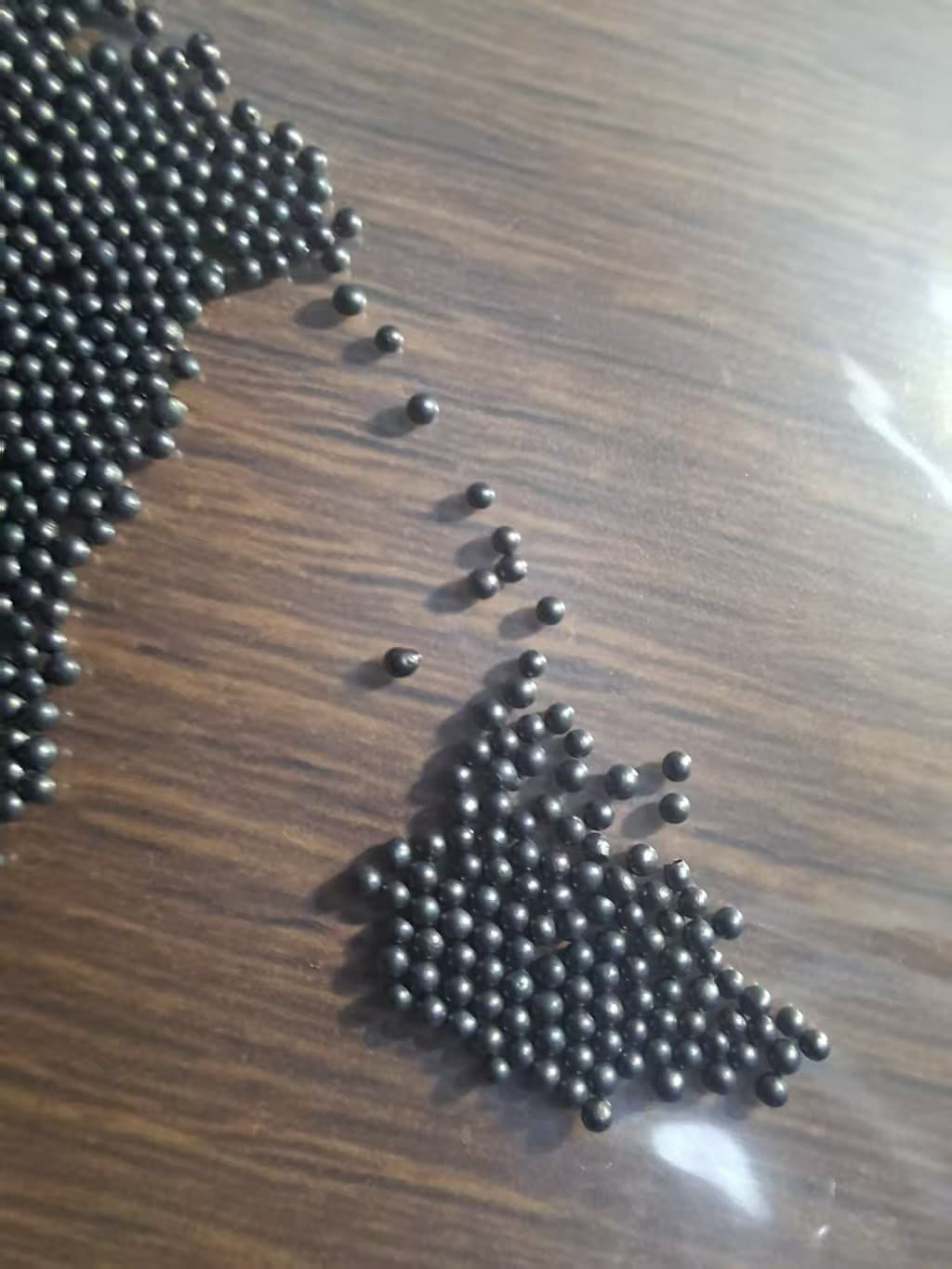
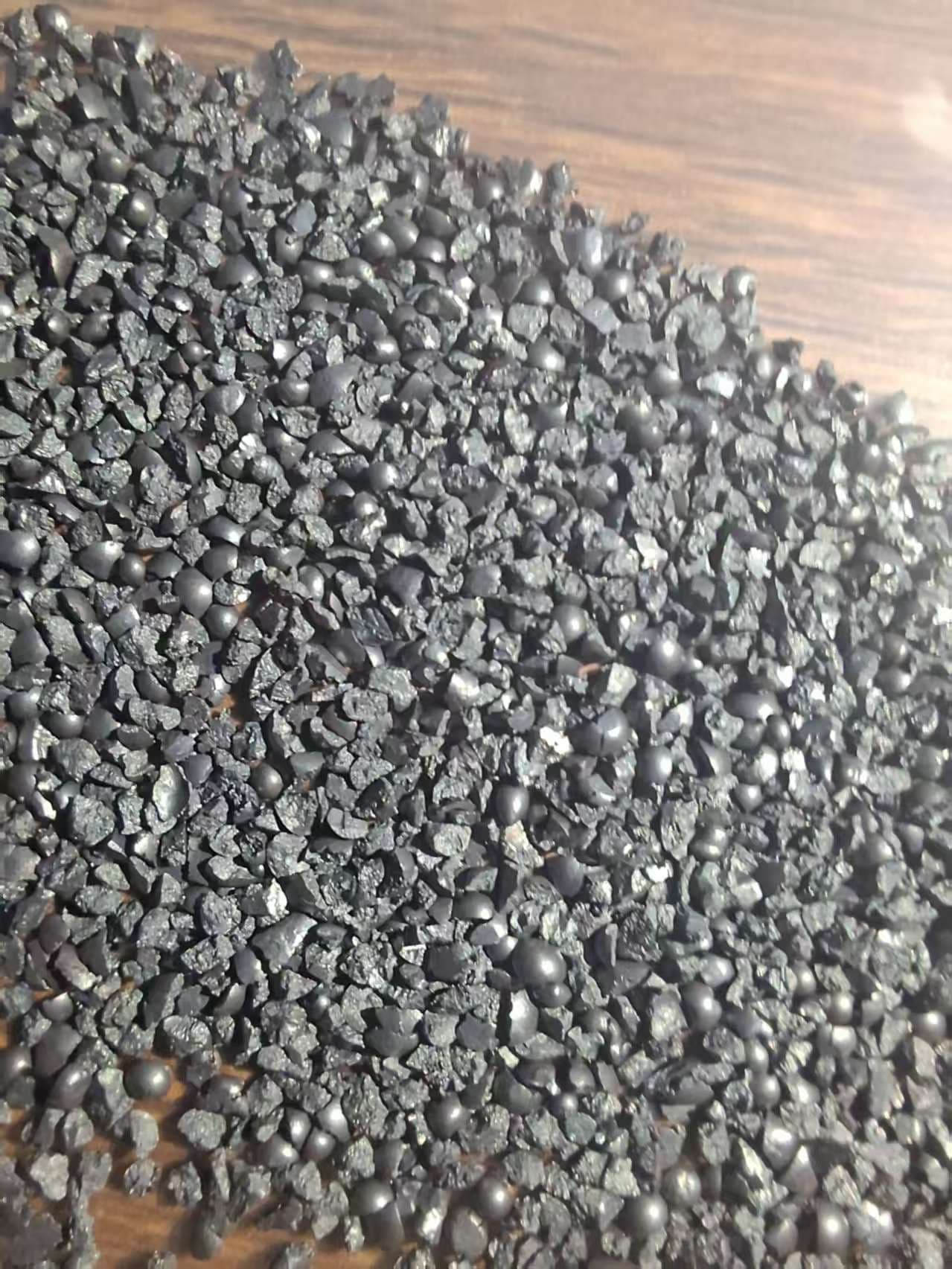
Steel grit and shot can be made from high- or medium-carbon steels; this article focuses on high-carbon cast-steel abrasives. Carbon affects hardenability, hardness and microstructure. If the carbon content is too low, the material may not reach the required hardness or cutting performance even after heat treatment. If it is too high, the abrasive may become too brittle and break during high-speed blasting.
Sulfur can form sulfide inclusions, which may contribute to brittleness or microcracking during heat treatment and use. Excess sulfur can increase the risk of premature fragmentation when the abrasive strikes a workpiece, generating more fines and shortening service life.
For high-carbon cast-steel shot and grit, the chemical-composition requirements in ISO 11124-3:2018 can be used as a reference. The standard specifies a carbon range of 0.80%–1.20% and a sulfur maximum of 0.05%.
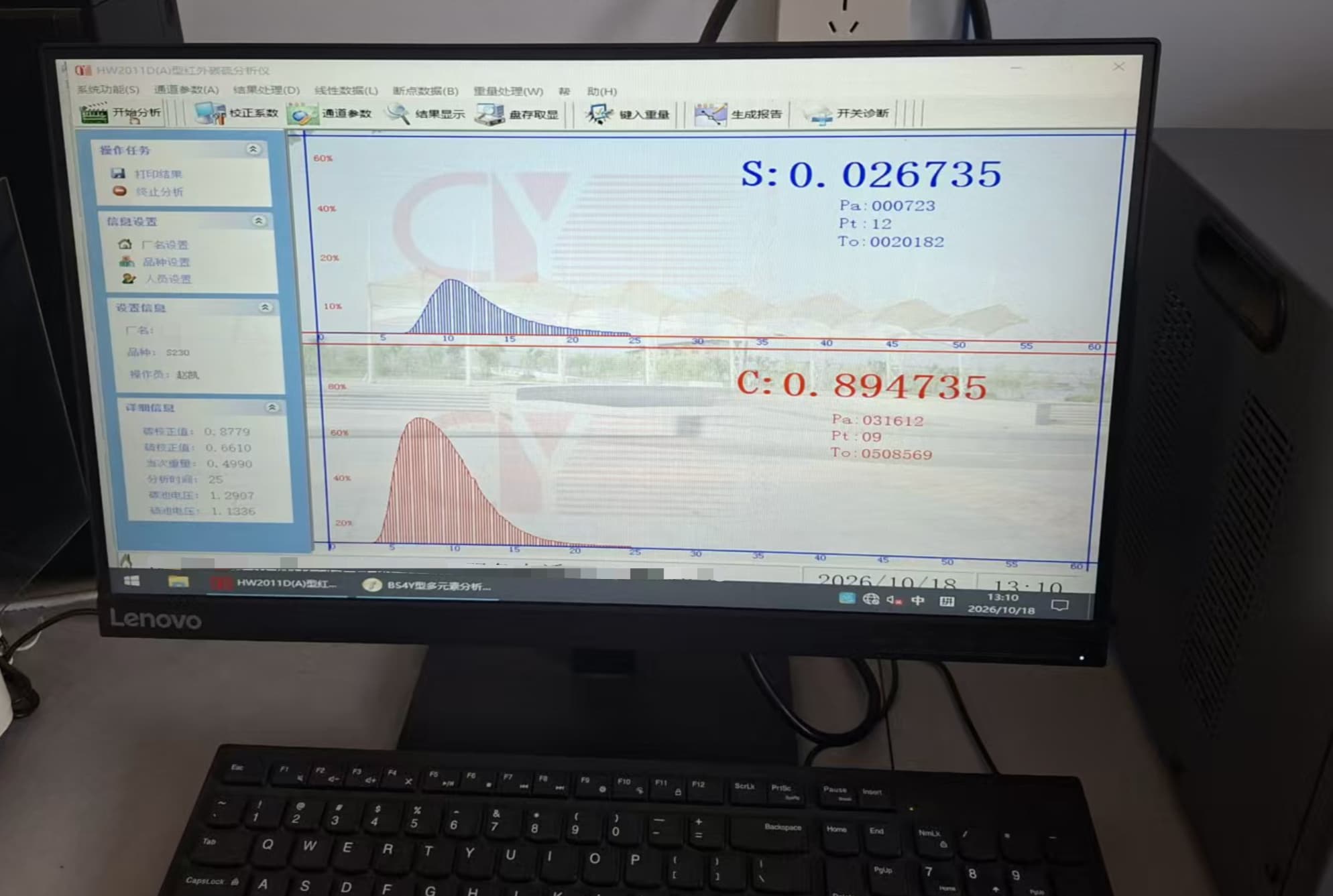
The red and blue peaks on the analyzer screen show infrared absorption signals from the combustion products used to measure carbon and sulfur. When reviewing these curves, the following points matter:
Clear peaks: The signals can be distinguished from the baseline.
Stable baseline: There is no obvious drift or abnormal noise before or after the peaks.
Complete peak shapes: There are no unexplained sharp spikes, repeated peaks or obvious truncation.
Reliable results: Instrument calibration, reference-material checks and repeat measurements meet the laboratory's quality-control requirements.
Blue curve — S (sulfur): Its peak appears near 10 on the horizontal display axis, then gradually falls back toward the baseline. Red curve — C (carbon): Its broader peak appears around 7–10 on that axis, then gradually declines.
Smooth, single peaks that return to baseline are useful signs of a clean measurement. They do not, by themselves, prove complete combustion or rule out interference; the result must also be checked against calibration, reference materials and repeatability.
Views: 0 Author: SEPPE STEEL Publish Time: 2026-10-20 Origin: SEPPPE Tech
For high-carbon cast-steel grit and shot, chemical analysis is an important part of composition quality control. It is not only a routine laboratory test; it also helps manufacturers verify whether the material meets specified requirements.
The reliability of test results depends first on whether samples are representative. Samples should be taken from the batch under inspection according to the established sampling procedure and mixed as required by the test method. This helps prevent sampling errors from making the results unrepresentative of the batch.
Elemental analysis typically uses a high-frequency infrared carbon-sulfur analyzer. A weighed sample of steel grit or shot is placed in a high-frequency induction furnace and burned in an oxygen-rich atmosphere. Carbon and sulfur in the sample are converted into carbon dioxide and sulfur dioxide. The gases then pass through infrared detection cells, where absorption at specific wavelengths is measured to calculate the mass fractions of carbon and sulfur.
Steel grit and shot can be made from high- or medium-carbon steels; this article focuses on high-carbon cast-steel abrasives. Carbon affects hardenability, hardness and microstructure. If the carbon content is too low, the material may not reach the required hardness or cutting performance even after heat treatment. If it is too high, the abrasive may become too brittle and break during high-speed blasting.
Sulfur can form sulfide inclusions, which may contribute to brittleness or microcracking during heat treatment and use. Excess sulfur can increase the risk of premature fragmentation when the abrasive strikes a workpiece, generating more fines and shortening service life.
For high-carbon cast-steel shot and grit, the chemical-composition requirements in ISO 11124-3:2018 can be used as a reference. The standard specifies a carbon range of 0.80%–1.20% and a sulfur maximum of 0.05%.
The red and blue peaks on the analyzer screen show infrared absorption signals from the combustion products used to measure carbon and sulfur. When reviewing these curves, the following points matter:
Clear peaks: The signals can be distinguished from the baseline.
Stable baseline: There is no obvious drift or abnormal noise before or after the peaks.
Complete peak shapes: There are no unexplained sharp spikes, repeated peaks or obvious truncation.
Reliable results: Instrument calibration, reference-material checks and repeat measurements meet the laboratory's quality-control requirements.
Blue curve — S (sulfur): Its peak appears near 10 on the horizontal display axis, then gradually falls back toward the baseline. Red curve — C (carbon): Its broader peak appears around 7–10 on that axis, then gradually declines.
Smooth, single peaks that return to baseline are useful signs of a clean measurement. They do not, by themselves, prove complete combustion or rule out interference; the result must also be checked against calibration, reference materials and repeatability.