Views: 97 Author: BXT TECH Publish Time: 2026-09-09 Origin: SEPPE
Bauxite in refractory industry usually refers to bauxite with alumina ≥75% and low iron oxide content after calcination. Bauxite is sintered at a high temperature of about 1350 degrees in Rotary Kiln or Shaft Kiln , then transformed from raw meal to clinker.
There are two kinds of bauxite: clinker and raw meal, but what's the difference between them?
The main difference between them is the different mineral types. The clinker is mullite. Bauxite is an alumina mineral containing crystal water.
Bauxite clinker(or you can call it as Mullite), referred to as high alumina clinker for short, is a solid block material calcined at high temperature in rotary furnace.(or in Shaft Kiln)
You can view an introduction to both methods here: Rotary Kiln vs. Shaft Kiln Calcined Bauxite for Refractories.
The main purpose of calcination is to remove crystal water and increase alumina content. The clinker is gray, light yellow and dark gray bauxite clinker. It is used in military industry, aerospace, communication, instrumentation, machinery and medical equipment departments.
The production of calcined bauxite is a comprehensive process that transforms natural bauxite ore into a dense, stable industrial clinker through raw ore screening, crushing and grading, and high-temperature calcination. During calcination, a mineral structure composed primarily of corundum and mullite gradually forms.
Ensuring product quality involves more than simply raising the temperature; factors such as raw ore composition, feed particle size, temperature profiles, residence time, cooling processes, final product screening, and batch testing all influence the final density, pore structure, and operational stability.
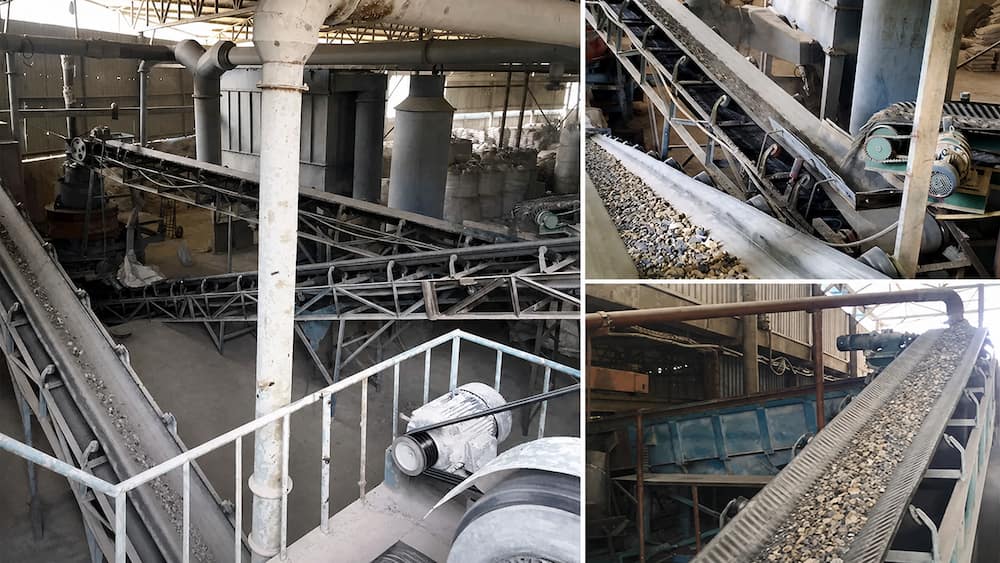
The manufacturing process begins with the screening and grading of raw ore. Impurities are first removed through manual or mechanical sorting; the ore is then crushed and graded to a specified particle size range before being fed into the kiln.
Particle size uniformity is crucial: if there is too great a disparity in particle sizes, fine particles may complete sintering prematurely while the interiors of larger particles remain incompletely reacted, ultimately resulting in inconsistent performance across the product batch.
Research on Chinese kaolinite-type bauxite categorizes the sintering process into three stages
Structural water is gradually removed from diaspore and kaolinite. Diaspore transforms into α-alumina (corundum phase), while kaolinite first converts to metakaolin; this stage is accompanied by mass loss and structural shrinkage.
Experimental observations indicate that diaspore gradually decomposes and forms the corundum phase within the 600–700°C range, though the specific transformation temperature varies depending on the ore source and heating conditions.
Silicon-bearing phases resulting from the decomposition of clay minerals react further with alumina to generate additional mullite. This stage reshapes the material's volume and pore structure and is a critical phase where differences in sintering characteristics between various ore sources become apparent.
Corundum and mullite crystals continue to grow, and particles gradually sinter and bond together; the density and pore structure of the finished product are established during this stage. Small amounts of other oxides influence liquid phase formation and sintering rates; their effects depend on the overall chemical composition and temperature conditions. While the liquid phase can promote densification to some extent, excessive amounts can negatively impact the material's refractoriness.
During this stage, the calcined bauxite (clinker) achieves the density and porosity specifications required for its specific grade.
Discharge from the kiln does not mark the end of the manufacturing process. The clinker undergoes cooling, batch segregation, re-crushing, and screening, ultimately being processed into the aggregate or powder products purchased by customers.
Inconsistencies in cooling and batch management can lead to the mixing of materials with different firing states. Insufficient screening precision can alter particle packing characteristics in refractory castables or affect feed performance in abrasive production.
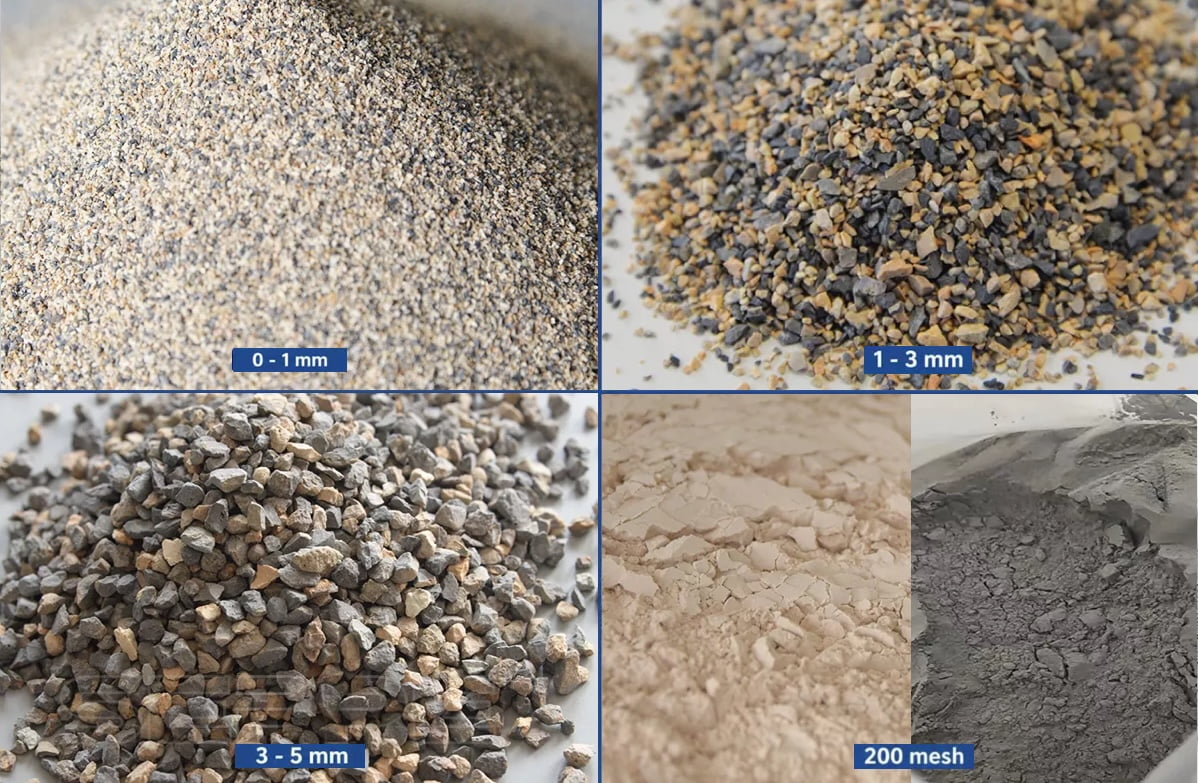
Industrial calcined bauxite is typically graded into 0–1 mm, 1–3 mm and 3–5 mm aggregate sizes.
For powder applications, additional grinding can be performed to produce refractory fine powders in 200 mesh or 325 mesh grades.
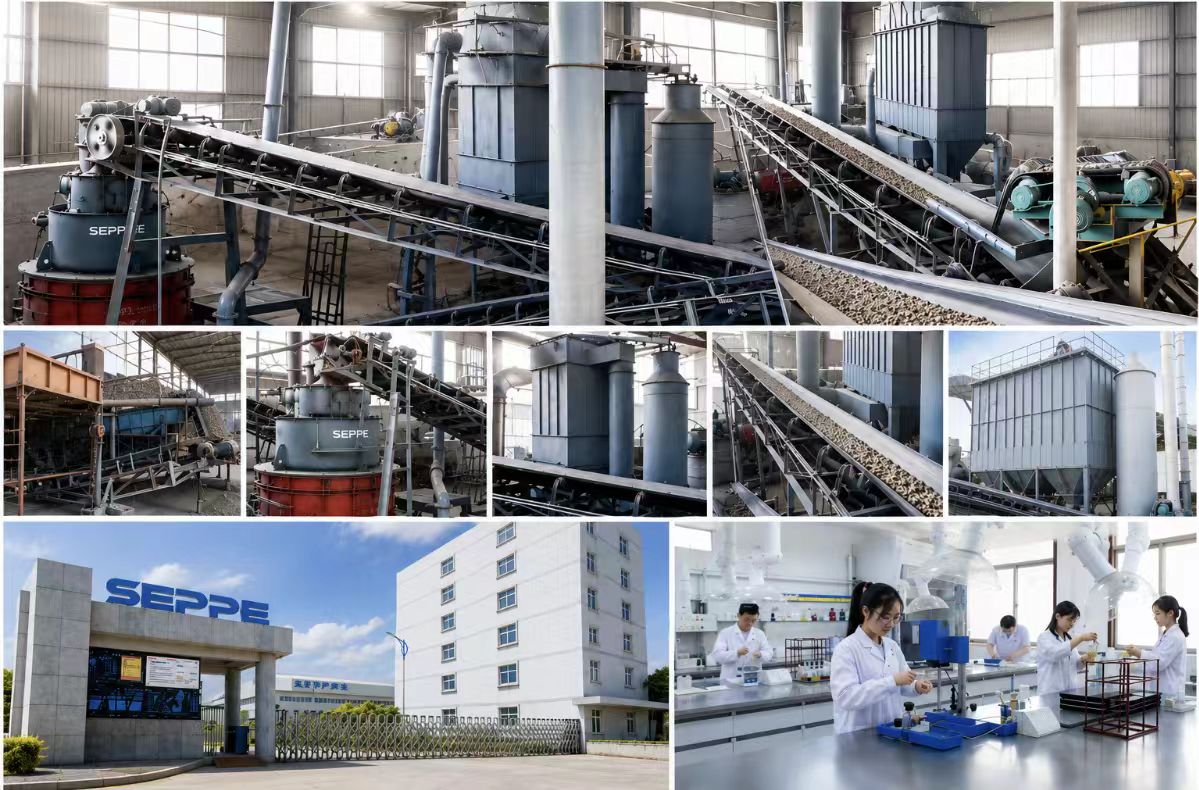
SEPPE processes aggregates and powders in various specifications tailored to the product's end-use (we recommend visiting the Rotary Kiln Calcined Bauxite product page).
Explore SEPPE calcined bauxite specifications or contact our technical team to discuss your refractory or abrasive application requirements.
Email: info@seppe.cn
Views: 97 Author: BXT TECH Publish Time: 2026-09-09 Origin: SEPPE
Bauxite in refractory industry usually refers to bauxite with alumina ≥75% and low iron oxide content after calcination. Bauxite is sintered at a high temperature of about 1350 degrees in Rotary Kiln or Shaft Kiln , then transformed from raw meal to clinker.
There are two kinds of bauxite: clinker and raw meal, but what's the difference between them?
The main difference between them is the different mineral types. The clinker is mullite. Bauxite is an alumina mineral containing crystal water.
Bauxite clinker(or you can call it as Mullite), referred to as high alumina clinker for short, is a solid block material calcined at high temperature in rotary furnace.(or in Shaft Kiln)
You can view an introduction to both methods here: Rotary Kiln vs. Shaft Kiln Calcined Bauxite for Refractories.
The main purpose of calcination is to remove crystal water and increase alumina content. The clinker is gray, light yellow and dark gray bauxite clinker. It is used in military industry, aerospace, communication, instrumentation, machinery and medical equipment departments.
The production of calcined bauxite is a comprehensive process that transforms natural bauxite ore into a dense, stable industrial clinker through raw ore screening, crushing and grading, and high-temperature calcination. During calcination, a mineral structure composed primarily of corundum and mullite gradually forms.
Ensuring product quality involves more than simply raising the temperature; factors such as raw ore composition, feed particle size, temperature profiles, residence time, cooling processes, final product screening, and batch testing all influence the final density, pore structure, and operational stability.
The manufacturing process begins with the screening and grading of raw ore. Impurities are first removed through manual or mechanical sorting; the ore is then crushed and graded to a specified particle size range before being fed into the kiln.
Particle size uniformity is crucial: if there is too great a disparity in particle sizes, fine particles may complete sintering prematurely while the interiors of larger particles remain incompletely reacted, ultimately resulting in inconsistent performance across the product batch.
Research on Chinese kaolinite-type bauxite categorizes the sintering process into three stages
Structural water is gradually removed from diaspore and kaolinite. Diaspore transforms into α-alumina (corundum phase), while kaolinite first converts to metakaolin; this stage is accompanied by mass loss and structural shrinkage.
Experimental observations indicate that diaspore gradually decomposes and forms the corundum phase within the 600–700°C range, though the specific transformation temperature varies depending on the ore source and heating conditions.
Silicon-bearing phases resulting from the decomposition of clay minerals react further with alumina to generate additional mullite. This stage reshapes the material's volume and pore structure and is a critical phase where differences in sintering characteristics between various ore sources become apparent.
Corundum and mullite crystals continue to grow, and particles gradually sinter and bond together; the density and pore structure of the finished product are established during this stage. Small amounts of other oxides influence liquid phase formation and sintering rates; their effects depend on the overall chemical composition and temperature conditions. While the liquid phase can promote densification to some extent, excessive amounts can negatively impact the material's refractoriness.
During this stage, the calcined bauxite (clinker) achieves the density and porosity specifications required for its specific grade.
Discharge from the kiln does not mark the end of the manufacturing process. The clinker undergoes cooling, batch segregation, re-crushing, and screening, ultimately being processed into the aggregate or powder products purchased by customers.
Inconsistencies in cooling and batch management can lead to the mixing of materials with different firing states. Insufficient screening precision can alter particle packing characteristics in refractory castables or affect feed performance in abrasive production.
Industrial calcined bauxite is typically graded into 0–1 mm, 1–3 mm and 3–5 mm aggregate sizes.
For powder applications, additional grinding can be performed to produce refractory fine powders in 200 mesh or 325 mesh grades.
SEPPE processes aggregates and powders in various specifications tailored to the product's end-use (we recommend visiting the Rotary Kiln Calcined Bauxite product page).
Explore SEPPE calcined bauxite specifications or contact our technical team to discuss your refractory or abrasive application requirements.
Email: info@seppe.cn